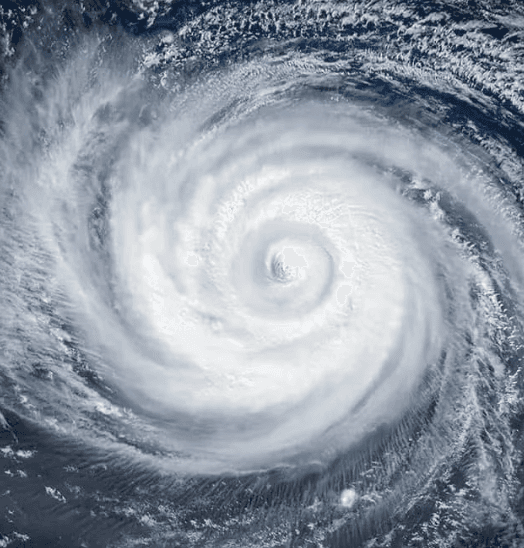
icon for Will Super Typhoon Dolphin make landfall at Category 4 strength or higher?

Will Super Typhoon Dolphin make landfall at Category 4 strength or higher?

icon for Will Super Typhoon Dolphin make landfall at Category 4 strength or higher?

Will Super Typhoon Dolphin make landfall at Category 4 strength or higher?

<1% chance
Polymarket

$16,912 Vol.

<1% chance
Polymarket

$16,912 Vol.

This market resolves "Yes" if Super Typhoon Dolphin makes landfall on any landmass while the most recently issued JMA advisory prior to the crossing shows maximum sustained wind speed near center of 105 knots or higher, corresponding approximately to Category 4 equivalent intensity on the Saffir-Simpson scale. Landfall is defined as the center of Dolphin's circulation physically crossing any coastline, as determined by the Japan Meteorological Agency's (JMA) position advisories (https://www.jma.go.jp/bosai/map.html#contents=typhoon&lang=en), or by credible international news reporting confirming landfall. The single JMA advisory in effect immediately prior to the observed crossing is authoritative for both position and intensity; no subsequent real-time advisory, reclassification, or post-season best-track reanalysis may retroactively change the outcome. JMA position advisories are the primary resolution source. If a JMA advisory plots the center on land, the market resolves based on that advisory's wind speed. If no JMA advisory plots the center on land but credible reporting confirms a crossing occurred between discrete advisory fixes, the intensity is taken from the most recently issued JMA advisory prior to the confirmed crossing time. This market resolves "No" if Dolphin makes landfall with the most recent prior JMA advisory showing maximum sustained winds below 105 knots, if Dolphin dissipates without making landfall on any territory, or if no landfall has physically occurred by the close of August 15, 2026.Super Typhoon Dolphin has undergone multiple eyewall replacement cycles and entered a region of drier air and less favorable ocean conditions, driving rapid weakening from its July peak above 160 mph. Official Joint Typhoon Warning Center and National Hurricane Center-equivalent guidance now show the system at or below Category 1 intensity (roughly 75–85 mph) as it approaches eastern China, with landfall in Zhejiang Province expected within hours amid continued decay from terrain interaction and the subtropical ridge steering. The 99.3% market-implied probability for “No” reflects this consensus trajectory and climatological precedent that few western Pacific systems maintain major intensity that close to the Asian mainland. A realistic shift would require an abrupt track change delaying landfall by several days over warmer waters, which current model runs do not support.

This market resolves "Yes" if Super Typhoon Dolphin makes landfall on any landmass while the most recently issued JMA advisory prior to the crossing shows maximum sustained wind speed near center of 105 knots or higher, corresponding approximately to Category 4 equivalent intensity on the Saffir-Simpson scale. Landfall is defined as the center of Dolphin's circulation physically crossing any coastline, as determined by the Japan Meteorological Agency's (JMA) position advisories (https://www.jma.go.jp/bosai/map.html#contents=typhoon&lang=en), or by credible international news reporting confirming landfall.

The single JMA advisory in effect immediately prior to the observed crossing is authoritative for both position and intensity; no subsequent real-time advisory, reclassification, or post-season best-track reanalysis may retroactively change the outcome.

JMA position advisories are the primary resolution source. If a JMA advisory plots the center on land, the market resolves based on that advisory's wind speed. If no JMA advisory plots the center on land but credible reporting confirms a crossing occurred between discrete advisory fixes, the intensity is taken from the most recently issued JMA advisory prior to the confirmed crossing time.

This market resolves "No" if Dolphin makes landfall with the most recent prior JMA advisory showing maximum sustained winds below 105 knots, if Dolphin dissipates without making landfall on any territory, or if no landfall has physically occurred by the close of August 15, 2026.
Volume
$16,912
Market Opened
Jul 30, 2026, 4:58 PM ET
This market resolves "Yes" if Super Typhoon Dolphin makes landfall on any landmass while the most recently issued JMA advisory prior to the crossing shows maximum sustained wind speed near center of 105 knots or higher, corresponding approximately to Category 4 equivalent intensity on the Saffir-Simpson scale. Landfall is defined as the center of Dolphin's circulation physically crossing any coastline, as determined by the Japan Meteorological Agency's (JMA) position advisories (https://www.jma.go.jp/bosai/map.html#contents=typhoon&lang=en), or by credible international news reporting confirming landfall. The single JMA advisory in effect immediately prior to the observed crossing is authoritative for both position and intensity; no subsequent real-time advisory, reclassification, or post-season best-track reanalysis may retroactively change the outcome. JMA position advisories are the primary resolution source. If a JMA advisory plots the center on land, the market resolves based on that advisory's wind speed. If no JMA advisory plots the center on land but credible reporting confirms a crossing occurred between discrete advisory fixes, the intensity is taken from the most recently issued JMA advisory prior to the confirmed crossing time. This market resolves "No" if Dolphin makes landfall with the most recent prior JMA advisory showing maximum sustained winds below 105 knots, if Dolphin dissipates without making landfall on any territory, or if no landfall has physically occurred by the close of August 15, 2026.
This market resolves "Yes" if Super Typhoon Dolphin makes landfall on any landmass while the most recently issued JMA advisory prior to the crossing shows maximum sustained wind speed near center of 105 knots or higher, corresponding approximately to Category 4 equivalent intensity on the Saffir-Simpson scale. Landfall is defined as the center of Dolphin's circulation physically crossing any coastline, as determined by the Japan Meteorological Agency's (JMA) position advisories (https://www.jma.go.jp/bosai/map.html#contents=typhoon&lang=en), or by credible international news reporting confirming landfall. The single JMA advisory in effect immediately prior to the observed crossing is authoritative for both position and intensity; no subsequent real-time advisory, reclassification, or post-season best-track reanalysis may retroactively change the outcome. JMA position advisories are the primary resolution source. If a JMA advisory plots the center on land, the market resolves based on that advisory's wind speed. If no JMA advisory plots the center on land but credible reporting confirms a crossing occurred between discrete advisory fixes, the intensity is taken from the most recently issued JMA advisory prior to the confirmed crossing time. This market resolves "No" if Dolphin makes landfall with the most recent prior JMA advisory showing maximum sustained winds below 105 knots, if Dolphin dissipates without making landfall on any territory, or if no landfall has physically occurred by the close of August 15, 2026.Super Typhoon Dolphin has undergone multiple eyewall replacement cycles and entered a region of drier air and less favorable ocean conditions, driving rapid weakening from its July peak above 160 mph. Official Joint Typhoon Warning Center and National Hurricane Center-equivalent guidance now show the system at or below Category 1 intensity (roughly 75–85 mph) as it approaches eastern China, with landfall in Zhejiang Province expected within hours amid continued decay from terrain interaction and the subtropical ridge steering. The 99.3% market-implied probability for “No” reflects this consensus trajectory and climatological precedent that few western Pacific systems maintain major intensity that close to the Asian mainland. A realistic shift would require an abrupt track change delaying landfall by several days over warmer waters, which current model runs do not support.

This market resolves "Yes" if Super Typhoon Dolphin makes landfall on any landmass while the most recently issued JMA advisory prior to the crossing shows maximum sustained wind speed near center of 105 knots or higher, corresponding approximately to Category 4 equivalent intensity on the Saffir-Simpson scale. Landfall is defined as the center of Dolphin's circulation physically crossing any coastline, as determined by the Japan Meteorological Agency's (JMA) position advisories (https://www.jma.go.jp/bosai/map.html#contents=typhoon&lang=en), or by credible international news reporting confirming landfall.

The single JMA advisory in effect immediately prior to the observed crossing is authoritative for both position and intensity; no subsequent real-time advisory, reclassification, or post-season best-track reanalysis may retroactively change the outcome.

JMA position advisories are the primary resolution source. If a JMA advisory plots the center on land, the market resolves based on that advisory's wind speed. If no JMA advisory plots the center on land but credible reporting confirms a crossing occurred between discrete advisory fixes, the intensity is taken from the most recently issued JMA advisory prior to the confirmed crossing time.

This market resolves "No" if Dolphin makes landfall with the most recent prior JMA advisory showing maximum sustained winds below 105 knots, if Dolphin dissipates without making landfall on any territory, or if no landfall has physically occurred by the close of August 15, 2026.
Volume
$16,912
End Date
Aug 16, 2026
Market Opened
Jul 30, 2026, 4:58 PM ET
This market resolves "Yes" if Super Typhoon Dolphin makes landfall on any landmass while the most recently issued JMA advisory prior to the crossing shows maximum sustained wind speed near center of 105 knots or higher, corresponding approximately to Category 4 equivalent intensity on the Saffir-Simpson scale. Landfall is defined as the center of Dolphin's circulation physically crossing any coastline, as determined by the Japan Meteorological Agency's (JMA) position advisories (https://www.jma.go.jp/bosai/map.html#contents=typhoon&lang=en), or by credible international news reporting confirming landfall. The single JMA advisory in effect immediately prior to the observed crossing is authoritative for both position and intensity; no subsequent real-time advisory, reclassification, or post-season best-track reanalysis may retroactively change the outcome. JMA position advisories are the primary resolution source. If a JMA advisory plots the center on land, the market resolves based on that advisory's wind speed. If no JMA advisory plots the center on land but credible reporting confirms a crossing occurred between discrete advisory fixes, the intensity is taken from the most recently issued JMA advisory prior to the confirmed crossing time. This market resolves "No" if Dolphin makes landfall with the most recent prior JMA advisory showing maximum sustained winds below 105 knots, if Dolphin dissipates without making landfall on any territory, or if no landfall has physically occurred by the close of August 15, 2026.

Beware of external links.

Frequently Asked Questions

"Will Super Typhoon Dolphin make landfall at Category 4 strength or higher?" is a prediction market on Polymarket where traders buy and sell "Yes" or "No" shares based on whether they believe this event will happen. The current crowd-sourced probability is 1% for "Yes." For example, if "Yes" is priced at 1¢, the market collectively assigns a 1% chance that this event will occur. These odds shift continuously as traders react to new developments and information. Shares in the correct outcome are redeemable for $1 each upon market resolution.

As of today, "Will Super Typhoon Dolphin make landfall at Category 4 strength or higher?" has generated $16.9K in total trading volume since the market launched on Jul 30, 2026. This level of trading activity reflects strong engagement from the Polymarket community and helps ensure that the current odds are informed by a deep pool of market participants. You can track live price movements and trade on any outcome directly on this page.

To trade on "Will Super Typhoon Dolphin make landfall at Category 4 strength or higher?," simply choose whether you believe the answer is "Yes" or "No." Each side has a current price that reflects the market's implied probability. Enter your amount and click "Trade." If you buy "Yes" shares and the outcome resolves as "Yes," each share pays out $1. If it resolves as "No," your "Yes" shares pay $0. You can also sell your shares at any time before resolution if you want to lock in a profit or cut a loss.

The current probability for "Will Super Typhoon Dolphin make landfall at Category 4 strength or higher?" is 1% for "Yes." This means the Polymarket crowd currently believes there is a 1% chance that this event will occur. These odds update in real-time based on actual trades, providing a continuously updated signal of what the market expects to happen.

The resolution rules for "Will Super Typhoon Dolphin make landfall at Category 4 strength or higher?" define exactly what needs to happen for each outcome to be declared a winner — including the official data sources used to determine the result. You can review the complete resolution criteria in the "Rules" section on this page above the comments. We recommend reading the rules carefully before trading, as they specify the precise conditions, edge cases, and sources that govern how this market is settled.