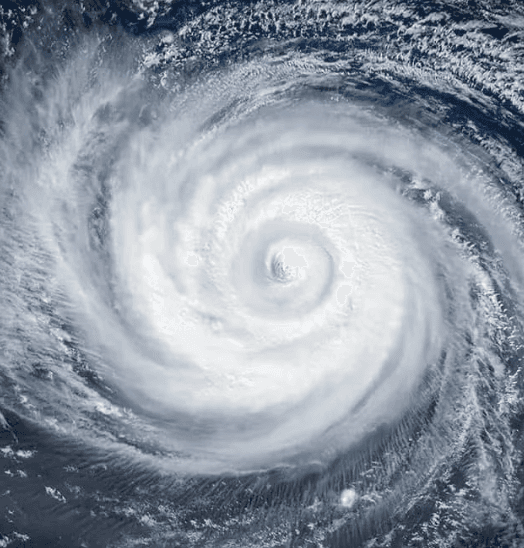
icon for Il super tifone Dolphin atterrerà con una forza di categoria 4 o superiore?

Il super tifone Dolphin atterrerà con una forza di categoria 4 o superiore?

icon for Il super tifone Dolphin atterrerà con una forza di categoria 4 o superiore?

Il super tifone Dolphin atterrerà con una forza di categoria 4 o superiore?

10% probabilità
Polymarket
NUOVO

10% probabilità
Polymarket
NUOVO
This market resolves "Yes" if Super Typhoon Dolphin makes landfall on any landmass while the most recently issued JMA advisory prior to the crossing shows maximum sustained wind speed near center of 105 knots or higher, corresponding approximately to Category 4 equivalent intensity on the Saffir-Simpson scale. Landfall is defined as the center of Dolphin's circulation physically crossing any coastline, as determined by the Japan Meteorological Agency's (JMA) position advisories (https://www.jma.go.jp/bosai/map.html#contents=typhoon&lang=en), or by credible international news reporting confirming landfall. The single JMA advisory in effect immediately prior to the observed crossing is authoritative for both position and intensity; no subsequent real-time advisory, reclassification, or post-season best-track reanalysis may retroactively change the outcome. JMA position advisories are the primary resolution source. If a JMA advisory plots the center on land, the market resolves based on that advisory's wind speed. If no JMA advisory plots the center on land but credible reporting confirms a crossing occurred between discrete advisory fixes, the intensity is taken from the most recently issued JMA advisory prior to the confirmed crossing time. This market resolves "No" if Dolphin makes landfall with the most recent prior JMA advisory showing maximum sustained winds below 105 knots, if Dolphin dissipates without making landfall on any territory, or if no landfall has physically occurred by the close of August 15, 2026.Recent Joint Typhoon Warning Center and model consensus show Super Typhoon Dolphin weakening after peaking near Category 5 intensity, with sustained winds now around 125–145 mph and further decline expected over the next several days. Environmental factors including increasing wind shear, cooler sea-surface temperatures, and a gradual westward turn toward the Ryukyu Islands or East China Sea are projected to reduce the system to Category 1–2 strength before any potential landfall window in early August. Official forecasts indicate no scenario of Category 4+ intensity at landfall, consistent with historical analogs for storms recurving at similar latitudes during developing El Niño conditions. Updated JTWC guidance and ensemble runs through the coming week will refine the track and intensity trends.

This market resolves "Yes" if Super Typhoon Dolphin makes landfall on any landmass while the most recently issued JMA advisory prior to the crossing shows maximum sustained wind speed near center of 105 knots or higher, corresponding approximately to Category 4 equivalent intensity on the Saffir-Simpson scale. Landfall is defined as the center of Dolphin's circulation physically crossing any coastline, as determined by the Japan Meteorological Agency's (JMA) position advisories (https://www.jma.go.jp/bosai/map.html#contents=typhoon&lang=en), or by credible international news reporting confirming landfall.

The single JMA advisory in effect immediately prior to the observed crossing is authoritative for both position and intensity; no subsequent real-time advisory, reclassification, or post-season best-track reanalysis may retroactively change the outcome.

JMA position advisories are the primary resolution source. If a JMA advisory plots the center on land, the market resolves based on that advisory's wind speed. If no JMA advisory plots the center on land but credible reporting confirms a crossing occurred between discrete advisory fixes, the intensity is taken from the most recently issued JMA advisory prior to the confirmed crossing time.

This market resolves "No" if Dolphin makes landfall with the most recent prior JMA advisory showing maximum sustained winds below 105 knots, if Dolphin dissipates without making landfall on any territory, or if no landfall has physically occurred by the close of August 15, 2026.
Volume
$25
Mercato aperto
Jul 30, 2026, 4:58 PM ET
This market resolves "Yes" if Super Typhoon Dolphin makes landfall on any landmass while the most recently issued JMA advisory prior to the crossing shows maximum sustained wind speed near center of 105 knots or higher, corresponding approximately to Category 4 equivalent intensity on the Saffir-Simpson scale. Landfall is defined as the center of Dolphin's circulation physically crossing any coastline, as determined by the Japan Meteorological Agency's (JMA) position advisories (https://www.jma.go.jp/bosai/map.html#contents=typhoon&lang=en), or by credible international news reporting confirming landfall. The single JMA advisory in effect immediately prior to the observed crossing is authoritative for both position and intensity; no subsequent real-time advisory, reclassification, or post-season best-track reanalysis may retroactively change the outcome. JMA position advisories are the primary resolution source. If a JMA advisory plots the center on land, the market resolves based on that advisory's wind speed. If no JMA advisory plots the center on land but credible reporting confirms a crossing occurred between discrete advisory fixes, the intensity is taken from the most recently issued JMA advisory prior to the confirmed crossing time. This market resolves "No" if Dolphin makes landfall with the most recent prior JMA advisory showing maximum sustained winds below 105 knots, if Dolphin dissipates without making landfall on any territory, or if no landfall has physically occurred by the close of August 15, 2026.
This market resolves "Yes" if Super Typhoon Dolphin makes landfall on any landmass while the most recently issued JMA advisory prior to the crossing shows maximum sustained wind speed near center of 105 knots or higher, corresponding approximately to Category 4 equivalent intensity on the Saffir-Simpson scale. Landfall is defined as the center of Dolphin's circulation physically crossing any coastline, as determined by the Japan Meteorological Agency's (JMA) position advisories (https://www.jma.go.jp/bosai/map.html#contents=typhoon&lang=en), or by credible international news reporting confirming landfall. The single JMA advisory in effect immediately prior to the observed crossing is authoritative for both position and intensity; no subsequent real-time advisory, reclassification, or post-season best-track reanalysis may retroactively change the outcome. JMA position advisories are the primary resolution source. If a JMA advisory plots the center on land, the market resolves based on that advisory's wind speed. If no JMA advisory plots the center on land but credible reporting confirms a crossing occurred between discrete advisory fixes, the intensity is taken from the most recently issued JMA advisory prior to the confirmed crossing time. This market resolves "No" if Dolphin makes landfall with the most recent prior JMA advisory showing maximum sustained winds below 105 knots, if Dolphin dissipates without making landfall on any territory, or if no landfall has physically occurred by the close of August 15, 2026.Recent Joint Typhoon Warning Center and model consensus show Super Typhoon Dolphin weakening after peaking near Category 5 intensity, with sustained winds now around 125–145 mph and further decline expected over the next several days. Environmental factors including increasing wind shear, cooler sea-surface temperatures, and a gradual westward turn toward the Ryukyu Islands or East China Sea are projected to reduce the system to Category 1–2 strength before any potential landfall window in early August. Official forecasts indicate no scenario of Category 4+ intensity at landfall, consistent with historical analogs for storms recurving at similar latitudes during developing El Niño conditions. Updated JTWC guidance and ensemble runs through the coming week will refine the track and intensity trends.

This market resolves "Yes" if Super Typhoon Dolphin makes landfall on any landmass while the most recently issued JMA advisory prior to the crossing shows maximum sustained wind speed near center of 105 knots or higher, corresponding approximately to Category 4 equivalent intensity on the Saffir-Simpson scale. Landfall is defined as the center of Dolphin's circulation physically crossing any coastline, as determined by the Japan Meteorological Agency's (JMA) position advisories (https://www.jma.go.jp/bosai/map.html#contents=typhoon&lang=en), or by credible international news reporting confirming landfall.

The single JMA advisory in effect immediately prior to the observed crossing is authoritative for both position and intensity; no subsequent real-time advisory, reclassification, or post-season best-track reanalysis may retroactively change the outcome.

JMA position advisories are the primary resolution source. If a JMA advisory plots the center on land, the market resolves based on that advisory's wind speed. If no JMA advisory plots the center on land but credible reporting confirms a crossing occurred between discrete advisory fixes, the intensity is taken from the most recently issued JMA advisory prior to the confirmed crossing time.

This market resolves "No" if Dolphin makes landfall with the most recent prior JMA advisory showing maximum sustained winds below 105 knots, if Dolphin dissipates without making landfall on any territory, or if no landfall has physically occurred by the close of August 15, 2026.
Volume
$25
Data di fine
16 ago 2026
Mercato aperto
Jul 30, 2026, 4:58 PM ET
This market resolves "Yes" if Super Typhoon Dolphin makes landfall on any landmass while the most recently issued JMA advisory prior to the crossing shows maximum sustained wind speed near center of 105 knots or higher, corresponding approximately to Category 4 equivalent intensity on the Saffir-Simpson scale. Landfall is defined as the center of Dolphin's circulation physically crossing any coastline, as determined by the Japan Meteorological Agency's (JMA) position advisories (https://www.jma.go.jp/bosai/map.html#contents=typhoon&lang=en), or by credible international news reporting confirming landfall. The single JMA advisory in effect immediately prior to the observed crossing is authoritative for both position and intensity; no subsequent real-time advisory, reclassification, or post-season best-track reanalysis may retroactively change the outcome. JMA position advisories are the primary resolution source. If a JMA advisory plots the center on land, the market resolves based on that advisory's wind speed. If no JMA advisory plots the center on land but credible reporting confirms a crossing occurred between discrete advisory fixes, the intensity is taken from the most recently issued JMA advisory prior to the confirmed crossing time. This market resolves "No" if Dolphin makes landfall with the most recent prior JMA advisory showing maximum sustained winds below 105 knots, if Dolphin dissipates without making landfall on any territory, or if no landfall has physically occurred by the close of August 15, 2026.

Fai attenzione ai link esterni.

Domande frequenti

"Il super tifone Dolphin atterrerà con una forza di categoria 4 o superiore?" è un mercato predittivo su Polymarket con 2 possibili esiti dove i trader comprano e vendono azioni in base a ciò che credono accadrà. L'esito attualmente in testa è "Il Super Tifone Dolphin toccherà terra con una forza pari o superiore alla categoria 4?" a 10%. I prezzi riflettono probabilità aggregate in tempo reale. Ad esempio, un'azione quotata a 10¢ implica che il mercato assegna collettivamente una probabilità di 10% a quell'esito. Queste quote cambiano continuamente man mano che i trader reagiscono a nuovi sviluppi e informazioni. Le azioni nell'esito corretto possono essere riscattate per $1 ciascuna alla risoluzione del mercato.

"Il super tifone Dolphin atterrerà con una forza di categoria 4 o superiore?" è un mercato appena creato su Polymarket, lanciato il Jul 30, 2026. Come mercato nuovo, questa è la tua opportunità di essere tra i primi trader a stabilire le quote e i segnali di prezzo iniziali del mercato. Puoi anche aggiungere questa pagina ai preferiti per monitorare il volume e l'attività di trading man mano che il mercato guadagna visibilità.

Per fare trading su "Il super tifone Dolphin atterrerà con una forza di categoria 4 o superiore?", esplora i 2 esiti disponibili elencati in questa pagina. Ogni esito mostra un prezzo corrente che rappresenta la probabilità implicita del mercato. Per prendere una posizione, seleziona l'esito che ritieni più probabile, scegli "Sì" per fare trading a suo favore o "No" per fare trading contro di esso, inserisci il tuo importo e clicca "Trading". Se il tuo esito scelto è corretto alla risoluzione del mercato, le tue azioni "Sì" pagano $1 ciascuna. Se è errato, pagano $0. Puoi anche vendere le tue azioni in qualsiasi momento prima della risoluzione se vuoi consolidare un profitto o limitare una perdita.

L'attuale favorito per "Il super tifone Dolphin atterrerà con una forza di categoria 4 o superiore?" è "Il Super Tifone Dolphin toccherà terra con una forza pari o superiore alla categoria 4?" a 10%, il che significa che il mercato assegna una probabilità di 10% a quell'esito. Queste quote si aggiornano in tempo reale man mano che i trader comprano e vendono azioni, quindi riflettono l'ultima visione collettiva di ciò che è più probabile che accada. Controlla frequentemente o aggiungi questa pagina ai preferiti per seguire come cambiano le quote man mano che emergono nuove informazioni.

Le regole di risoluzione per "Il super tifone Dolphin atterrerà con una forza di categoria 4 o superiore?" definiscono esattamente cosa deve accadere affinché ogni esito venga dichiarato vincitore — comprese le fonti di dati ufficiali utilizzate per determinare il risultato. Puoi consultare i criteri completi di risoluzione nella sezione "Regole" di questa pagina sopra i commenti. Ti consigliamo di leggere attentamente le regole prima di fare trading, poiché specificano le condizioni precise, i casi limite e le fonti che regolano come viene risolto questo mercato.