
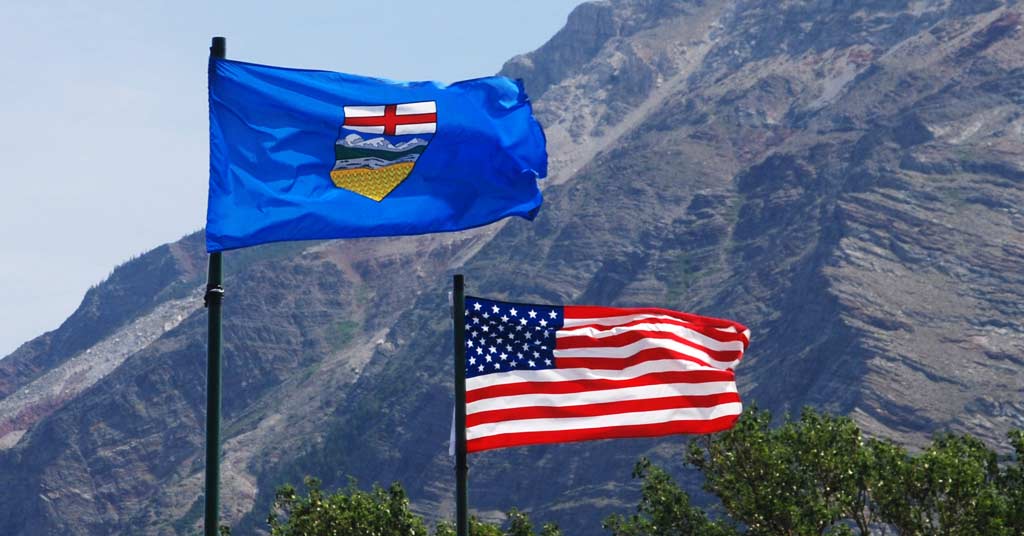
**High trader consensus on "No" for Alberta joining the United States stems from multiple structural and political barriers.** Alberta remains a Canadian province under the Constitution, with any separation requiring compliance with the Clarity Act, provincial and federal approval, and resolution of First Nations treaty rights issues that have already produced court challenges. The October 19, 2026, referendum asks only whether to initiate a future binding vote on independence as a sovereign country, not annexation or U.S. statehood. Separatist groups such as the Alberta Prosperity Project have pursued U.S. contacts for potential economic support or recognition of independence, yet their platform explicitly targets sovereignty rather than integration into the United States. Limited polling shows only small minorities favoring U.S. accession, while broader sentiment favors remaining in Canada. Even amid U.S.-Canada trade tensions and comments from Trump administration officials on Alberta as a resource partner, no formal annexation pathway, bilateral negotiations, or enabling legislation exists on either side. Late developments such as referendum results or shifts in federal relations could theoretically alter trajectories, though constitutional and diplomatic hurdles make direct U.S. accession improbable.
Experimental AI-generated summary referencing Polymarket data. This is not trading advice and plays no role in how this market resolves. · Updated$2,190,276 Vol.
$2,190,276 Vol.
$2,190,276 Vol.
$2,190,276 Vol.
Sovereignty is defined as the transfer of the majority of the territory of Alberta as of February 6, 2026, currently a Canadian province, to being under the formal governance or jurisdiction of the United States, either as a state, territory, or other classification within the US system.
An official announcement made by the United States and Canada that Alberta will come under US sovereignty, within this market's timeframe, will qualify, even if the actual transfer of sovereignty is yet to occur. Only announcements of official agreements or actions (e.g. a ratified treaty, signed legislation, etc.) will count - mere suggestions, negotiations, or posts on Social Media will not.
The resolution source for this market will be official information from the governments of the US, Canada, and Alberta, however a consensus of credible reporting confirming that Alberta has come under U.S. sovereignty will also qualify.
Market Opened: Feb 6, 2026, 5:03 PM ET
Resolver
0x65070BE91...Sovereignty is defined as the transfer of the majority of the territory of Alberta as of February 6, 2026, currently a Canadian province, to being under the formal governance or jurisdiction of the United States, either as a state, territory, or other classification within the US system.
An official announcement made by the United States and Canada that Alberta will come under US sovereignty, within this market's timeframe, will qualify, even if the actual transfer of sovereignty is yet to occur. Only announcements of official agreements or actions (e.g. a ratified treaty, signed legislation, etc.) will count - mere suggestions, negotiations, or posts on Social Media will not.
The resolution source for this market will be official information from the governments of the US, Canada, and Alberta, however a consensus of credible reporting confirming that Alberta has come under U.S. sovereignty will also qualify.
Resolver
0x65070BE91...**High trader consensus on "No" for Alberta joining the United States stems from multiple structural and political barriers.** Alberta remains a Canadian province under the Constitution, with any separation requiring compliance with the Clarity Act, provincial and federal approval, and resolution of First Nations treaty rights issues that have already produced court challenges. The October 19, 2026, referendum asks only whether to initiate a future binding vote on independence as a sovereign country, not annexation or U.S. statehood. Separatist groups such as the Alberta Prosperity Project have pursued U.S. contacts for potential economic support or recognition of independence, yet their platform explicitly targets sovereignty rather than integration into the United States. Limited polling shows only small minorities favoring U.S. accession, while broader sentiment favors remaining in Canada. Even amid U.S.-Canada trade tensions and comments from Trump administration officials on Alberta as a resource partner, no formal annexation pathway, bilateral negotiations, or enabling legislation exists on either side. Late developments such as referendum results or shifts in federal relations could theoretically alter trajectories, though constitutional and diplomatic hurdles make direct U.S. accession improbable.
Experimental AI-generated summary referencing Polymarket data. This is not trading advice and plays no role in how this market resolves. · Updated

Beware of external links.
Beware of external links.
Frequently Asked Questions