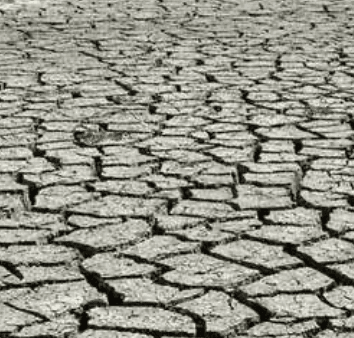
**Recent heat and dryness under a persistent high-pressure ridge have intensified exceptional (D4) drought across parts of the southern and central Plains, Upper Midwest, and Intermountain West, while monsoon activity has provided patchy relief in the Southwest.** As of the August 25 USDM map (released August 27), D4 covers small but notable portions of states including Idaho, New Mexico, Nebraska, Arkansas, Mississippi, Nevada, and at least a few others in the Northwest and Rockies, with degradation noted in soil moisture, streamflow, and groundwater amid above-normal temperatures and evapotranspiration demand. A strong El Niño pattern favors continued drier conditions in the Northwest and northern Plains but wetter signals farther south, creating short-term uncertainty for the September 1 reporting week. Flash-drought dynamics—rapid onset driven by heat and missed convective rainfall—can tip marginal areas into or out of D4 thresholds within days, while the USDM’s blend of precipitation, temperature, and hydrologic indicators means even modest late-August or early-September rains could shrink D4 footprints in borderline states. This explains why market-implied odds cluster tightly around mid-range outcomes (roughly 5–9 or fewer states) versus 10+, reflecting trader assessment of whether expansion in the Plains and Northwest will outweigh any monsoon-driven contraction or localized improvements before the next map.
Polymarketデータを参照したAI生成の実験的な要約。これは取引アドバイスではなく、このマーケットの解決方法には一切関係ありません。 · 更新日2026年9月1日の週に、D 4 (異常な干ばつ)になる州はいくつありますか?
2026年9月1日の週に、D 4 (異常な干ばつ)になる州はいくつありますか?
1〜2州 38%
3~4州 38%
5〜6州 38%
7~9州 38%
0州
2%
1〜2州
38%
3~4州
38%
5〜6州
38%
7~9州
38%
10州以上
47%
1〜2州 38%
3~4州 38%
5〜6州 38%
7~9州 38%
0州
2%
1〜2州
38%
3~4州
38%
5〜6州
38%
7~9州
38%
10州以上
47%
Brackets: 0 / 1-2 / 3-4 / 5-6 / 7-9 / 10+. Exactly one bracket resolves "Yes".
The count ranges over all 48 coterminous states — the 48 states excluding Alaska and Hawaii. The District of Columbia and U.S. territories are not considered.
Each USDM release covers the seven-day period ending Tuesday at 8:00 AM ET and is published the following Thursday.
Resolution is based on the first published US Drought Monitor release for the listed week. Subsequent revisions will not be considered; the first published release is final.
The resolution source for this market is the US Drought Monitor at droughtmonitor.unl.edu.
マーケット開始日: Aug 27, 2026, 9:00 AM ET
Brackets: 0 / 1-2 / 3-4 / 5-6 / 7-9 / 10+. Exactly one bracket resolves "Yes".
The count ranges over all 48 coterminous states — the 48 states excluding Alaska and Hawaii. The District of Columbia and U.S. territories are not considered.
Each USDM release covers the seven-day period ending Tuesday at 8:00 AM ET and is published the following Thursday.
Resolution is based on the first published US Drought Monitor release for the listed week. Subsequent revisions will not be considered; the first published release is final.
The resolution source for this market is the US Drought Monitor at droughtmonitor.unl.edu.
**Recent heat and dryness under a persistent high-pressure ridge have intensified exceptional (D4) drought across parts of the southern and central Plains, Upper Midwest, and Intermountain West, while monsoon activity has provided patchy relief in the Southwest.** As of the August 25 USDM map (released August 27), D4 covers small but notable portions of states including Idaho, New Mexico, Nebraska, Arkansas, Mississippi, Nevada, and at least a few others in the Northwest and Rockies, with degradation noted in soil moisture, streamflow, and groundwater amid above-normal temperatures and evapotranspiration demand. A strong El Niño pattern favors continued drier conditions in the Northwest and northern Plains but wetter signals farther south, creating short-term uncertainty for the September 1 reporting week. Flash-drought dynamics—rapid onset driven by heat and missed convective rainfall—can tip marginal areas into or out of D4 thresholds within days, while the USDM’s blend of precipitation, temperature, and hydrologic indicators means even modest late-August or early-September rains could shrink D4 footprints in borderline states. This explains why market-implied odds cluster tightly around mid-range outcomes (roughly 5–9 or fewer states) versus 10+, reflecting trader assessment of whether expansion in the Plains and Northwest will outweigh any monsoon-driven contraction or localized improvements before the next map.
Polymarketデータを参照したAI生成の実験的な要約。これは取引アドバイスではなく、このマーケットの解決方法には一切関係ありません。 · 更新日
外部リンクに注意してください。
外部リンクに注意してください。
よくある質問