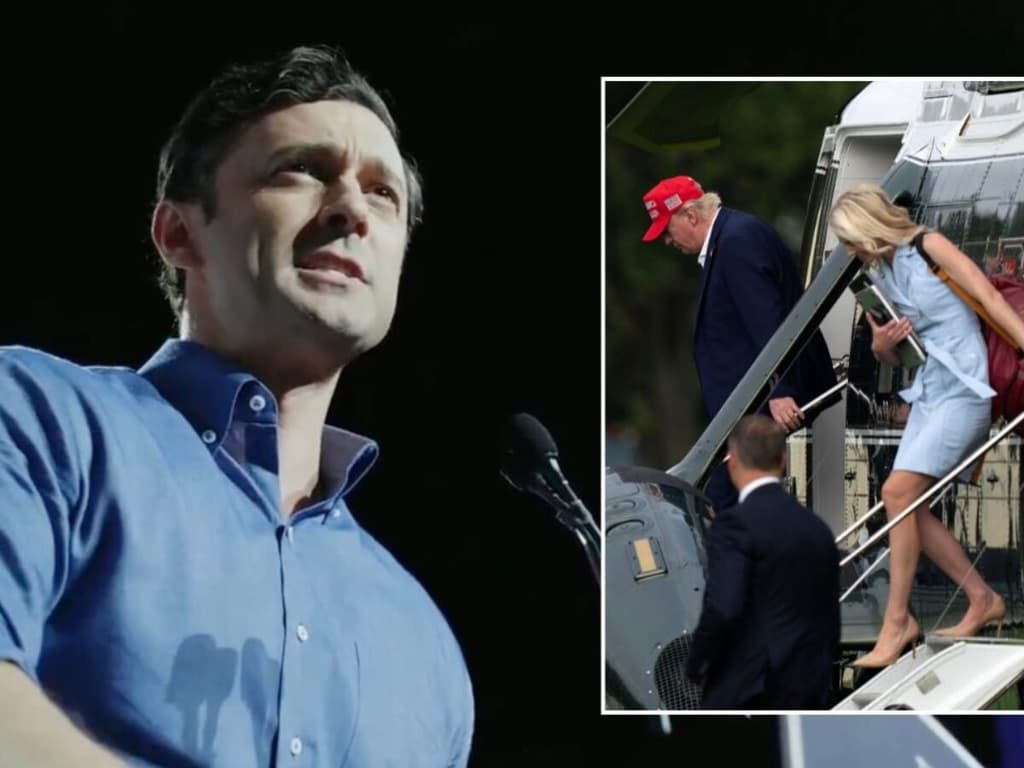
Recent developments center on Sen. Jon Ossoff’s weekend remarks at a Georgia reelection event, where he invoked White House executive assistant Natalie Harp while criticizing President Trump’s focus and travel habits, prompting immediate pushback from Trump and Republican allies who accused Ossoff of insinuation. Ossoff later doubled down in interviews, describing Harp and similar aides as part of a protective circle around the president. Harp, a longtime loyal aide serving as Trump’s executive assistant since 2025 and known primarily for gatekeeping access rather than public commentary, has not issued any statements in response. With the August 31 resolution window only days away and Harp’s established low public profile amid the ongoing Iran-related and campaign exchanges, trader pricing reflects the limited likelihood of her personally delivering a public insult in the brief remaining period.
基于Polymarket数据的AI实验性摘要。这不是交易建议,也不影响该市场的结算方式。 · 更新于A public statement is any written, verbal, or recorded statement which is either made in a public setting, published by the speaker, or on the record to media, and the direct language of which is made publicly available. Statements made in private that are subsequently leaked will not qualify, even if credibly reported. Narrations and paraphrasings do not qualify.
Images and videos posted on verified social media accounts will only qualify if they contain insulting language clearly directed at the individual, whether within the content itself or in an accompanying caption. A quote post will only qualify if added language independently qualifies as an insult; a repost of another account's post will not qualify.
A public statement qualifies as an insult if it mocks, degrades, or disparages the individual either personally or professionally. This includes calling the individual a clearly insulting trait (e.g., weak, stupid, disloyal, a failure), using an insulting nickname (e.g., Crooked Hillary), using other clearly derogatory language, or using the negative form of a positive trait in a clearly derogatory manner (e.g., “He isn’t smart”, “He has no judgment”). Disparaging the individual in their professional capacity will qualify (e.g., "He is a disaster candidate," "He is terrible at his job"); however, negative comments directed at the individual's specific actions, policies, or decisions will not qualify (e.g., "He has bad policies," "He is wrong about healthcare").
A statement made in direct reference to the individual will qualify even if they are not named, so long as it is reasonably clear from context that they are the subject.
The resolution sources will be public statements made by Natalie Harp and a consensus of credible reporting.
市场开放时间: Aug 18, 2026, 3:07 PM ET
Resolver
0x65070BE91...A public statement is any written, verbal, or recorded statement which is either made in a public setting, published by the speaker, or on the record to media, and the direct language of which is made publicly available. Statements made in private that are subsequently leaked will not qualify, even if credibly reported. Narrations and paraphrasings do not qualify.
Images and videos posted on verified social media accounts will only qualify if they contain insulting language clearly directed at the individual, whether within the content itself or in an accompanying caption. A quote post will only qualify if added language independently qualifies as an insult; a repost of another account's post will not qualify.
A public statement qualifies as an insult if it mocks, degrades, or disparages the individual either personally or professionally. This includes calling the individual a clearly insulting trait (e.g., weak, stupid, disloyal, a failure), using an insulting nickname (e.g., Crooked Hillary), using other clearly derogatory language, or using the negative form of a positive trait in a clearly derogatory manner (e.g., “He isn’t smart”, “He has no judgment”). Disparaging the individual in their professional capacity will qualify (e.g., "He is a disaster candidate," "He is terrible at his job"); however, negative comments directed at the individual's specific actions, policies, or decisions will not qualify (e.g., "He has bad policies," "He is wrong about healthcare").
A statement made in direct reference to the individual will qualify even if they are not named, so long as it is reasonably clear from context that they are the subject.
The resolution sources will be public statements made by Natalie Harp and a consensus of credible reporting.
Resolver
0x65070BE91...Recent developments center on Sen. Jon Ossoff’s weekend remarks at a Georgia reelection event, where he invoked White House executive assistant Natalie Harp while criticizing President Trump’s focus and travel habits, prompting immediate pushback from Trump and Republican allies who accused Ossoff of insinuation. Ossoff later doubled down in interviews, describing Harp and similar aides as part of a protective circle around the president. Harp, a longtime loyal aide serving as Trump’s executive assistant since 2025 and known primarily for gatekeeping access rather than public commentary, has not issued any statements in response. With the August 31 resolution window only days away and Harp’s established low public profile amid the ongoing Iran-related and campaign exchanges, trader pricing reflects the limited likelihood of her personally delivering a public insult in the brief remaining period.
基于Polymarket数据的AI实验性摘要。这不是交易建议,也不影响该市场的结算方式。 · 更新于

警惕外部链接哦。
警惕外部链接哦。
常见问题