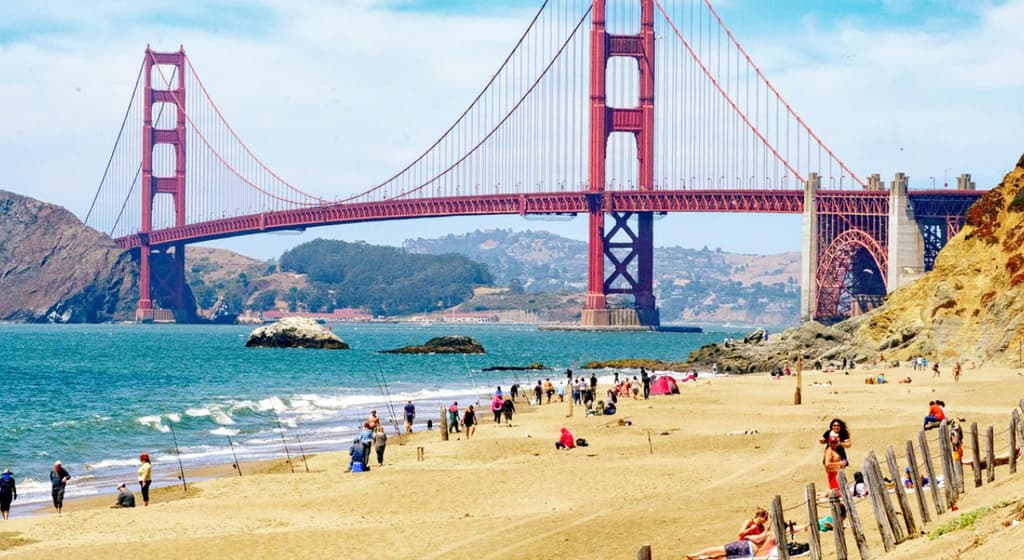
Persistent marine layer stratus and moderate onshore flow are the dominant factors keeping trader-implied odds clustered on 66–69°F for San Francisco’s August 13 high, with 66–67°F leading at 36%. National Weather Service guidance and ensemble runs indicate the inversion will limit daytime heating along the coast, consistent with typical August climatology where mean highs hover near 69–70°F but rarely exceed 73°F without offshore flow. Differentiation among the closely spaced bins hinges on subtle variations in marine-layer depth, stratus clearance timing, and any brief afternoon sunshine that could add 1–2°F; stronger or more persistent fog favors the lower outcomes, while partial burn-off supports the upper end. Updated model cycles and morning observations from the National Weather Service will provide the next resolution-relevant signals before the daily maximum is recorded.
基于Polymarket数据的AI实验性摘要。这不是交易建议,也不影响该市场的结算方式。 · 更新于8月13日旧金山气温最高?
8月13日旧金山气温最高?
66-67°F 37%
68-69°F 27%
64-65°F 13%
70-71°F 11%
57°F或以下
<1%
58-59°F
1%
60-61°F
1%
62-63°F
6%
64-65°F
13%
66-67°F
37%
68-69°F
27%
70-71°F
11%
72-73°F
6%
74-75°F
3%
76°F或更高
<1%
66-67°F 37%
68-69°F 27%
64-65°F 13%
70-71°F 11%
57°F或以下
<1%
58-59°F
1%
60-61°F
1%
62-63°F
6%
64-65°F
13%
66-67°F
37%
68-69°F
27%
70-71°F
11%
72-73°F
6%
74-75°F
3%
76°F或更高
<1%
This market will resolve to the temperature range that contains the highest temperature recorded at the San Francisco International Airport Station in degrees Fahrenheit on 13 Aug '26.
The resolution source for this market will be information from Wunderground, specifically the highest temperature recorded for all times on this day for the San Francisco International Airport Station, available here: https://www.wunderground.com/history/daily/us/ca/san-francisco/KSFO.
To toggle between Fahrenheit and Celsius, click the gear icon next to the search bar and switch the Temperature setting between °F and °C.
This market can not resolve until the first data point for the following date has been published on the resolution source.
The resolution source for this market measures temperatures to whole degrees Fahrenheit (eg, 21°F). Thus, this is the level of precision that will be used when resolving the market.
Revisions to temperatures recorded within this market's timeframe will be considered until the first datapoint for the following date has been published, after which any alterations will not be considered.
市场开放时间: Aug 11, 2026, 9:03 PM ET
This market will resolve to the temperature range that contains the highest temperature recorded at the San Francisco International Airport Station in degrees Fahrenheit on 13 Aug '26.
The resolution source for this market will be information from Wunderground, specifically the highest temperature recorded for all times on this day for the San Francisco International Airport Station, available here: https://www.wunderground.com/history/daily/us/ca/san-francisco/KSFO.
To toggle between Fahrenheit and Celsius, click the gear icon next to the search bar and switch the Temperature setting between °F and °C.
This market can not resolve until the first data point for the following date has been published on the resolution source.
The resolution source for this market measures temperatures to whole degrees Fahrenheit (eg, 21°F). Thus, this is the level of precision that will be used when resolving the market.
Revisions to temperatures recorded within this market's timeframe will be considered until the first datapoint for the following date has been published, after which any alterations will not be considered.
Persistent marine layer stratus and moderate onshore flow are the dominant factors keeping trader-implied odds clustered on 66–69°F for San Francisco’s August 13 high, with 66–67°F leading at 36%. National Weather Service guidance and ensemble runs indicate the inversion will limit daytime heating along the coast, consistent with typical August climatology where mean highs hover near 69–70°F but rarely exceed 73°F without offshore flow. Differentiation among the closely spaced bins hinges on subtle variations in marine-layer depth, stratus clearance timing, and any brief afternoon sunshine that could add 1–2°F; stronger or more persistent fog favors the lower outcomes, while partial burn-off supports the upper end. Updated model cycles and morning observations from the National Weather Service will provide the next resolution-relevant signals before the daily maximum is recorded.
基于Polymarket数据的AI实验性摘要。这不是交易建议,也不影响该市场的结算方式。 · 更新于
警惕外部链接哦。
警惕外部链接哦。
常见问题