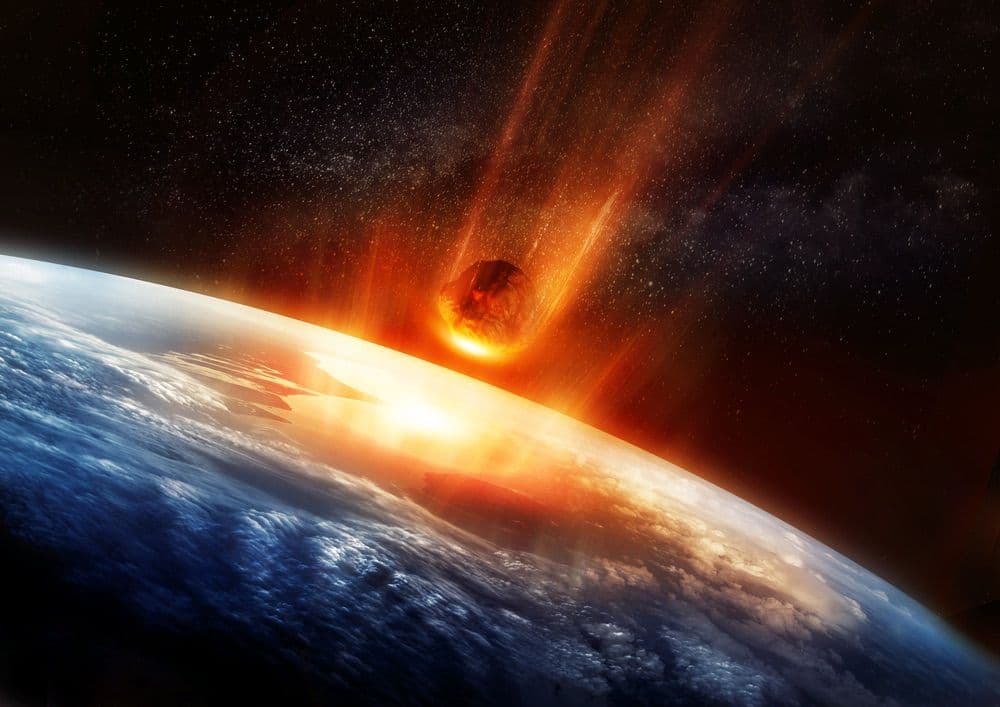
NASA’s Center for Near-Earth Object Studies reports no known asteroids large enough to deliver 5 kilotons of impact energy on collision courses through 2026 or beyond, with Sentry and Scout systems continuously updating orbits of detected near-Earth objects. A 5 kt event would require an undetected roughly 5–10 meter stony body, objects that are difficult to spot until days or hours before atmospheric entry yet occur far less frequently than smaller fireballs already tracked in 2026. Recent surges in reported bolides and meteorite falls reflect improved detection rather than elevated risk, while multiple documented close approaches of house- and airplane-sized asteroids have all passed safely at distances well beyond lunar orbit. Trader consensus therefore reflects the low baseline annual probability tempered by the slim chance of surprise impact from an unmonitored fragment.
基於Polymarket數據的AI實驗性摘要。這不是交易建議,也不影響該市場的結算方式。 · 更新於是
$312,090 交易量
$312,090 交易量
是
$312,090 交易量
$312,090 交易量
The object must be classified as a natural meteoroid; events involving artificial objects or reentry vehicles do not qualify.
The primary resolution source will be the NASA JPL Fireball and Bolide Data repository: https://cneos.jpl.nasa.gov/fireballs/. The relevant field for determining impact energy is the “Impact Energy (kt)” column. If this dataset has not been updated to include all relevant dates by February 28, 2027, or if the NASA JPL Fireball and Bolide Data repository becomes permanently unavailable, this market may resolve based on a consensus of credible sources including the European Space Agency (ESA), the International Asteroid Warning Network (IAWN), the U.S. Department of Defense, or credible reporting of a scientific consensus, such as a NASA press release.
市場開放時間: Dec 31, 2025, 12:04 PM ET
Resolver
0x65070BE91...The object must be classified as a natural meteoroid; events involving artificial objects or reentry vehicles do not qualify.
The primary resolution source will be the NASA JPL Fireball and Bolide Data repository: https://cneos.jpl.nasa.gov/fireballs/. The relevant field for determining impact energy is the “Impact Energy (kt)” column. If this dataset has not been updated to include all relevant dates by February 28, 2027, or if the NASA JPL Fireball and Bolide Data repository becomes permanently unavailable, this market may resolve based on a consensus of credible sources including the European Space Agency (ESA), the International Asteroid Warning Network (IAWN), the U.S. Department of Defense, or credible reporting of a scientific consensus, such as a NASA press release.
Resolver
0x65070BE91...NASA’s Center for Near-Earth Object Studies reports no known asteroids large enough to deliver 5 kilotons of impact energy on collision courses through 2026 or beyond, with Sentry and Scout systems continuously updating orbits of detected near-Earth objects. A 5 kt event would require an undetected roughly 5–10 meter stony body, objects that are difficult to spot until days or hours before atmospheric entry yet occur far less frequently than smaller fireballs already tracked in 2026. Recent surges in reported bolides and meteorite falls reflect improved detection rather than elevated risk, while multiple documented close approaches of house- and airplane-sized asteroids have all passed safely at distances well beyond lunar orbit. Trader consensus therefore reflects the low baseline annual probability tempered by the slim chance of surprise impact from an unmonitored fragment.
基於Polymarket數據的AI實驗性摘要。這不是交易建議,也不影響該市場的結算方式。 · 更新於
警惕外部連結哦。
警惕外部連結哦。
Frequently Asked Questions