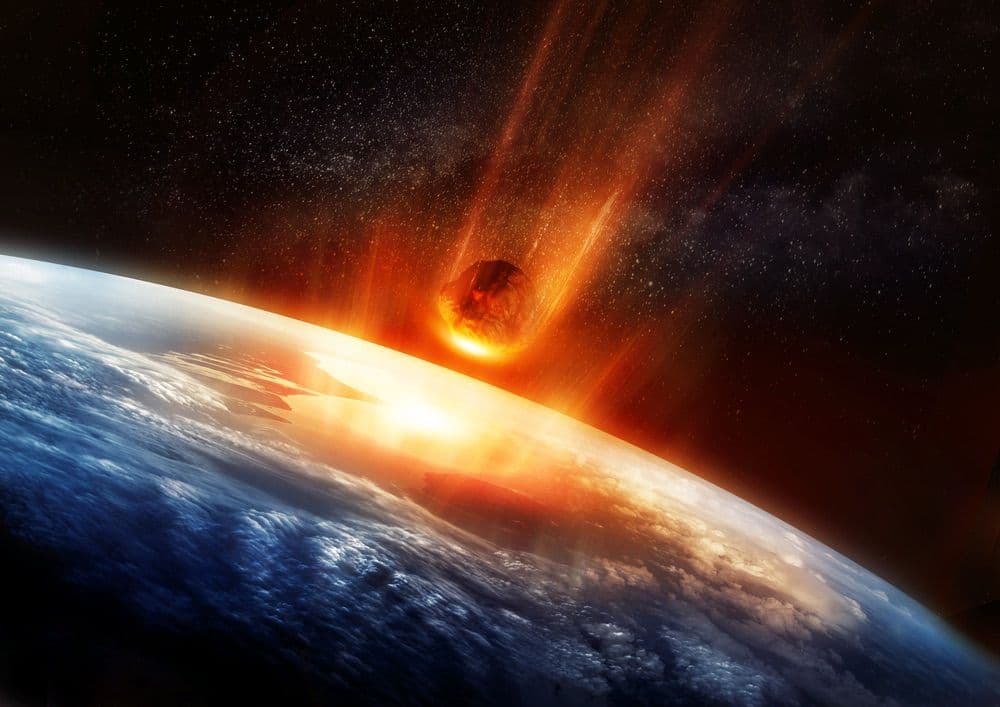
Ongoing NASA monitoring via CNEOS and Sentry systems shows no known near-Earth objects on collision trajectories capable of a 5kt energy release in 2026, supporting the 70.5% market-implied odds against such an event. Historical impact frequencies indicate atmospheric airbursts or strikes releasing around 5kt occur roughly once per year on average, but these are often undetected or smaller than resolution thresholds, with ground strikes rarer. Recent 2026 bolides and meteorite falls tracked by AMS and NOAA sensors have remained well below this energy scale, consistent with typical sporadic activity rather than elevated risk. No new observational data or model updates have shifted the low-probability outlook for the remainder of the year.
Resumo experimental gerado por IA com dados do Polymarket. Isto não é aconselhamento de trading e não tem qualquer papel na resolução deste mercado. · AtualizadoQueda de meteoro de 5kt em 2026?
Queda de meteoro de 5kt em 2026?
Sim
30% chance
$312,008 Vol.
$312,008 Vol.
31 dez 2026
Sim
30% chance
$312,008 Vol.
$312,008 Vol.
31 dez 2026
This market will resolve to "Yes" if a natural meteoroid (bolide) explodes in Earth's atmosphere with a total impact energy greater than or equal to 5 kilotons of TNT equivalent between January 1 and December 31, 2026, 11:59 PM ET. Otherwise, this market will resolve to “No”.
The object must be classified as a natural meteoroid; events involving artificial objects or reentry vehicles do not qualify.
The primary resolution source will be the NASA JPL Fireball and Bolide Data repository: https://cneos.jpl.nasa.gov/fireballs/. The relevant field for determining impact energy is the “Impact Energy (kt)” column. If this dataset has not been updated to include all relevant dates by February 28, 2027, or if the NASA JPL Fireball and Bolide Data repository becomes permanently unavailable, this market may resolve based on a consensus of credible sources including the European Space Agency (ESA), the International Asteroid Warning Network (IAWN), the U.S. Department of Defense, or credible reporting of a scientific consensus, such as a NASA press release.Ongoing NASA monitoring via CNEOS and Sentry systems shows no known near-Earth objects on collision trajectories capable of a 5kt energy release in 2026, supporting the 70.5% market-implied odds against such an event. Historical impact frequencies indicate atmospheric airbursts or strikes releasing around 5kt occur roughly once per year on average, but these are often undetected or smaller than resolution thresholds, with ground strikes rarer. Recent 2026 bolides and meteorite falls tracked by AMS and NOAA sensors have remained well below this energy scale, consistent with typical sporadic activity rather than elevated risk. No new observational data or model updates have shifted the low-probability outlook for the remainder of the year.
This market will resolve to "Yes" if a natural meteoroid (bolide) explodes in Earth's atmosphere with a total impact energy greater than or equal to 5 kilotons of TNT equivalent between January 1 and December 31, 2026, 11:59 PM ET. Otherwise, this market will resolve to “No”.
The object must be classified as a natural meteoroid; events involving artificial objects or reentry vehicles do not qualify.
The primary resolution source will be the NASA JPL Fireball and Bolide Data repository: https://cneos.jpl.nasa.gov/fireballs/. The relevant field for determining impact energy is the “Impact Energy (kt)” column. If this dataset has not been updated to include all relevant dates by February 28, 2027, or if the NASA JPL Fireball and Bolide Data repository becomes permanently unavailable, this market may resolve based on a consensus of credible sources including the European Space Agency (ESA), the International Asteroid Warning Network (IAWN), the U.S. Department of Defense, or credible reporting of a scientific consensus, such as a NASA press release.
The object must be classified as a natural meteoroid; events involving artificial objects or reentry vehicles do not qualify.
The primary resolution source will be the NASA JPL Fireball and Bolide Data repository: https://cneos.jpl.nasa.gov/fireballs/. The relevant field for determining impact energy is the “Impact Energy (kt)” column. If this dataset has not been updated to include all relevant dates by February 28, 2027, or if the NASA JPL Fireball and Bolide Data repository becomes permanently unavailable, this market may resolve based on a consensus of credible sources including the European Space Agency (ESA), the International Asteroid Warning Network (IAWN), the U.S. Department of Defense, or credible reporting of a scientific consensus, such as a NASA press release.
Mercado Aberto: Dec 31, 2025, 12:04 PM ET
Volume
$312,008Data de Término
31 dez 2026Mercado Aberto
Dec 31, 2025, 12:04 PM ETResolver
0x65070BE91...This market will resolve to "Yes" if a natural meteoroid (bolide) explodes in Earth's atmosphere with a total impact energy greater than or equal to 5 kilotons of TNT equivalent between January 1 and December 31, 2026, 11:59 PM ET. Otherwise, this market will resolve to “No”.
The object must be classified as a natural meteoroid; events involving artificial objects or reentry vehicles do not qualify.
The primary resolution source will be the NASA JPL Fireball and Bolide Data repository: https://cneos.jpl.nasa.gov/fireballs/. The relevant field for determining impact energy is the “Impact Energy (kt)” column. If this dataset has not been updated to include all relevant dates by February 28, 2027, or if the NASA JPL Fireball and Bolide Data repository becomes permanently unavailable, this market may resolve based on a consensus of credible sources including the European Space Agency (ESA), the International Asteroid Warning Network (IAWN), the U.S. Department of Defense, or credible reporting of a scientific consensus, such as a NASA press release.Ongoing NASA monitoring via CNEOS and Sentry systems shows no known near-Earth objects on collision trajectories capable of a 5kt energy release in 2026, supporting the 70.5% market-implied odds against such an event. Historical impact frequencies indicate atmospheric airbursts or strikes releasing around 5kt occur roughly once per year on average, but these are often undetected or smaller than resolution thresholds, with ground strikes rarer. Recent 2026 bolides and meteorite falls tracked by AMS and NOAA sensors have remained well below this energy scale, consistent with typical sporadic activity rather than elevated risk. No new observational data or model updates have shifted the low-probability outlook for the remainder of the year.
This market will resolve to "Yes" if a natural meteoroid (bolide) explodes in Earth's atmosphere with a total impact energy greater than or equal to 5 kilotons of TNT equivalent between January 1 and December 31, 2026, 11:59 PM ET. Otherwise, this market will resolve to “No”.
The object must be classified as a natural meteoroid; events involving artificial objects or reentry vehicles do not qualify.
The primary resolution source will be the NASA JPL Fireball and Bolide Data repository: https://cneos.jpl.nasa.gov/fireballs/. The relevant field for determining impact energy is the “Impact Energy (kt)” column. If this dataset has not been updated to include all relevant dates by February 28, 2027, or if the NASA JPL Fireball and Bolide Data repository becomes permanently unavailable, this market may resolve based on a consensus of credible sources including the European Space Agency (ESA), the International Asteroid Warning Network (IAWN), the U.S. Department of Defense, or credible reporting of a scientific consensus, such as a NASA press release.
The object must be classified as a natural meteoroid; events involving artificial objects or reentry vehicles do not qualify.
The primary resolution source will be the NASA JPL Fireball and Bolide Data repository: https://cneos.jpl.nasa.gov/fireballs/. The relevant field for determining impact energy is the “Impact Energy (kt)” column. If this dataset has not been updated to include all relevant dates by February 28, 2027, or if the NASA JPL Fireball and Bolide Data repository becomes permanently unavailable, this market may resolve based on a consensus of credible sources including the European Space Agency (ESA), the International Asteroid Warning Network (IAWN), the U.S. Department of Defense, or credible reporting of a scientific consensus, such as a NASA press release.
Volume
$312,008Data de Término
31 dez 2026Mercado Aberto
Dec 31, 2025, 12:04 PM ETResolver
0x65070BE91...Ongoing NASA monitoring via CNEOS and Sentry systems shows no known near-Earth objects on collision trajectories capable of a 5kt energy release in 2026, supporting the 70.5% market-implied odds against such an event. Historical impact frequencies indicate atmospheric airbursts or strikes releasing around 5kt occur roughly once per year on average, but these are often undetected or smaller than resolution thresholds, with ground strikes rarer. Recent 2026 bolides and meteorite falls tracked by AMS and NOAA sensors have remained well below this energy scale, consistent with typical sporadic activity rather than elevated risk. No new observational data or model updates have shifted the low-probability outlook for the remainder of the year.
Resumo experimental gerado por IA com dados do Polymarket. Isto não é aconselhamento de trading e não tem qualquer papel na resolução deste mercado. · Atualizado
Cuidado com os links externos.
Cuidado com os links externos.
Frequently Asked Questions