
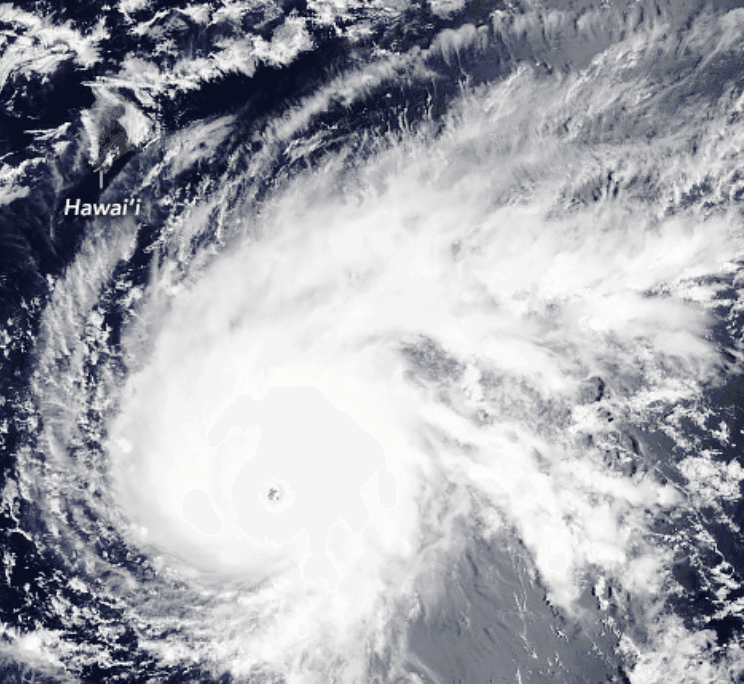
**Hurricane Lowell's official National Hurricane Center track keeps its center well offshore the Hawaiian Islands, supporting the market's 94.5% implied probability of no landfall.** As of the latest advisories, the Category 5 system sits roughly 600 miles south-southwest of Honolulu and is forecast to slow, then execute a sharp northward turn Sunday, passing about 150 miles west of Niihau or Kauai as a major hurricane Monday into Monday night. Ensemble guidance shows broad spread but clusters on an offshore track similar to past Central Pacific systems that produced impacts without direct landfall. Increasing wind shear and cooling waters should promote weakening before closest approach. A sharper or slower turn driven by interaction with nearby Hurricane Karina could shift the path eastward enough for landfall, though current model consensus and steering patterns make that outcome unlikely.
Résumé expérimental généré par IA à partir des données Polymarket. Ceci n'est pas un conseil de trading et ne joue aucun rôle dans la résolution de ce marché. · Mis à jourL'ouragan Lowell touchera-t-il terre à Hawaï ?
L'ouragan Lowell touchera-t-il terre à Hawaï ?
Oui
Oui
A hurricane is a tropical cyclone with maximum sustained winds of 74 mph or greater (Category 1 or higher on the Saffir-Simpson Hurricane Wind Scale), as described at https://www.nhc.noaa.gov/aboutsshws.php, and a hurricane landfall is said to occur when the hurricane's surface center intersects with the coastline, as described at https://www.nhc.noaa.gov/aboutgloss.shtml#LANDFALL. Lowell must hold hurricane strength (Category 1 or higher on the Saffir-Simpson scale) at the moment its surface center intersects the coastline for that landfall to qualify. If Lowell is classified as a tropical storm, a tropical depression, or a post-tropical cyclone at the moment its surface center intersects the coastline, this market will resolve to "No".
Whether a landfall occurred in Hawaii is determined solely by the official CPHC or NHC advisories. If those advisories report that Lowell made landfall in Hawaii, or on any island, atoll, reef, or shoal that those advisories identify as part of Hawaii, that landfall counts for the purposes of this market. This market applies no independent geographic definition of Hawaii, and no geographic boundary other than the one the CPHC or NHC advisories apply.
The wind speed at the moment of landfall will be determined from the CPHC or NHC advisory or Special Advisory in effect at the time closest to the reported landfall time; where no advisory covers that exact moment, the most recent advisory issued prior to landfall governs.
This market will resolve based on the initial CPHC or NHC advisory reporting a qualifying landfall regardless of any later advisory, retraction, best-track revision, or reanalysis that revises Lowell's intensity downward at the time of landfall. In the event that the CPHC or NHC do not publish landfall data for Hurricane Lowell by September 12, 2026 11:59 PM ET, or if the CPHC or NHC become unavailable, this market will resolve "No".
Marché ouvert : Sep 4, 2026, 12:02 PM ET
Résolveur
0x65070BE91...A hurricane is a tropical cyclone with maximum sustained winds of 74 mph or greater (Category 1 or higher on the Saffir-Simpson Hurricane Wind Scale), as described at https://www.nhc.noaa.gov/aboutsshws.php, and a hurricane landfall is said to occur when the hurricane's surface center intersects with the coastline, as described at https://www.nhc.noaa.gov/aboutgloss.shtml#LANDFALL. Lowell must hold hurricane strength (Category 1 or higher on the Saffir-Simpson scale) at the moment its surface center intersects the coastline for that landfall to qualify. If Lowell is classified as a tropical storm, a tropical depression, or a post-tropical cyclone at the moment its surface center intersects the coastline, this market will resolve to "No".
Whether a landfall occurred in Hawaii is determined solely by the official CPHC or NHC advisories. If those advisories report that Lowell made landfall in Hawaii, or on any island, atoll, reef, or shoal that those advisories identify as part of Hawaii, that landfall counts for the purposes of this market. This market applies no independent geographic definition of Hawaii, and no geographic boundary other than the one the CPHC or NHC advisories apply.
The wind speed at the moment of landfall will be determined from the CPHC or NHC advisory or Special Advisory in effect at the time closest to the reported landfall time; where no advisory covers that exact moment, the most recent advisory issued prior to landfall governs.
This market will resolve based on the initial CPHC or NHC advisory reporting a qualifying landfall regardless of any later advisory, retraction, best-track revision, or reanalysis that revises Lowell's intensity downward at the time of landfall. In the event that the CPHC or NHC do not publish landfall data for Hurricane Lowell by September 12, 2026 11:59 PM ET, or if the CPHC or NHC become unavailable, this market will resolve "No".
Résolveur
0x65070BE91...**Hurricane Lowell's official National Hurricane Center track keeps its center well offshore the Hawaiian Islands, supporting the market's 94.5% implied probability of no landfall.** As of the latest advisories, the Category 5 system sits roughly 600 miles south-southwest of Honolulu and is forecast to slow, then execute a sharp northward turn Sunday, passing about 150 miles west of Niihau or Kauai as a major hurricane Monday into Monday night. Ensemble guidance shows broad spread but clusters on an offshore track similar to past Central Pacific systems that produced impacts without direct landfall. Increasing wind shear and cooling waters should promote weakening before closest approach. A sharper or slower turn driven by interaction with nearby Hurricane Karina could shift the path eastward enough for landfall, though current model consensus and steering patterns make that outcome unlikely.
Résumé expérimental généré par IA à partir des données Polymarket. Ceci n'est pas un conseil de trading et ne joue aucun rôle dans la résolution de ce marché. · Mis à jour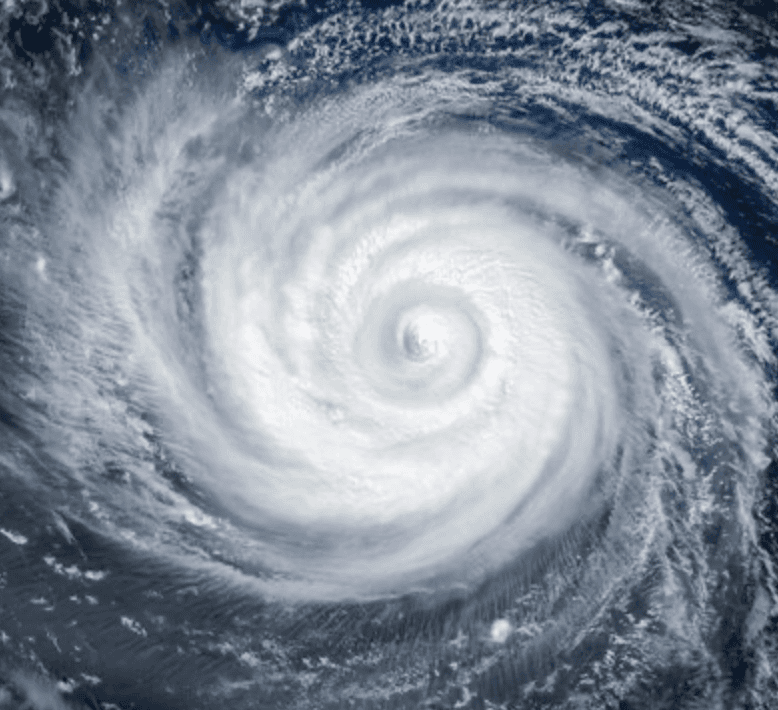

Méfiez-vous des liens externes.
Méfiez-vous des liens externes.
Questions fréquentes