
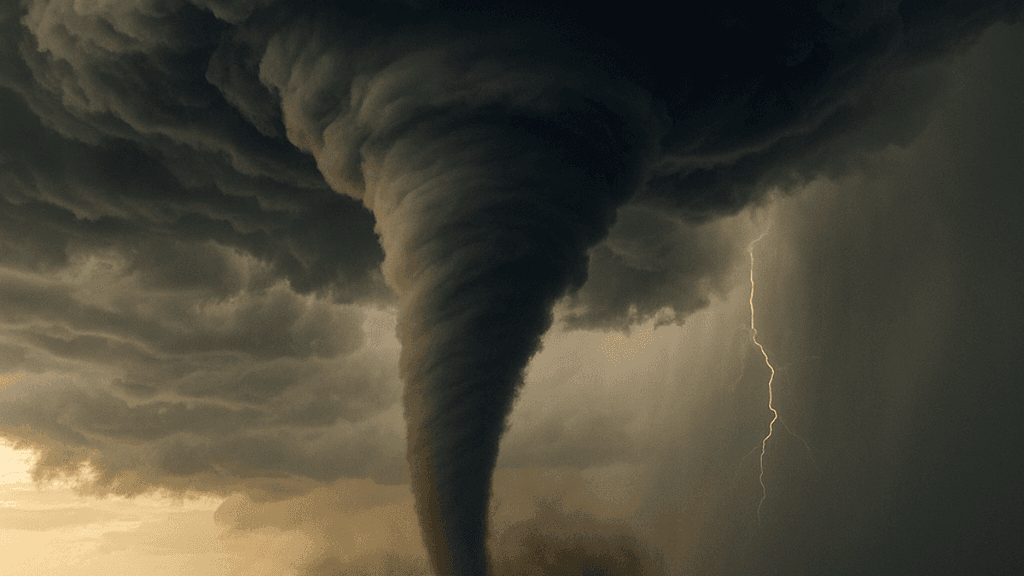
National Weather Service surveys confirm an EF2 tornado with 115 mph winds touched down in Detroit on September 4, marking the city’s first since 1997, alongside an EF0 in nearby Lincoln Park, amid a slight risk area outlined by the Storm Prediction Center. A frontal boundary combined with moderate instability and northwesterly flow aloft fueled organized thunderstorm clusters across the southern Great Lakes and mid-Ohio Valley, where 2% tornado probabilities centered on cities like Columbus and Fort Wayne. Damaging winds posed the dominant threat per SPC outlooks, consistent with historical September patterns of reduced but localized severe potential east of the Plains. Post-event damage assessments and any additional NWS confirmations will refine resolution criteria for affected urban areas.
Résumé expérimental généré par IA à partir des données Polymarket. Ceci n'est pas un conseil de trading et ne joue aucun rôle dans la résolution de ce marché. · Mis à jourQuelles villes sont exposées au risque de tornade le 4 septembre ?
Quelles villes sont exposées au risque de tornade le 4 septembre ?
$8,497 Vol.
Chicago, IL
Non
Houston, TX
Non
San Antonio, TX
Non
Dallas, TX
Non
Austin, TX
Non
Fort Worth, TX
Non
Columbus, OH
Oui
Charlotte, NC
Non
Indianapolis, IN
Non
Denver, CO
Non
Nashville, TN
Non
Oklahoma City, OK
Non
Memphis, TN
Non
Louisville, KY
Non
Atlanta, GA
Non
Kansas City, MO
Non
Omaha, NE
Non
Minneapolis, MN
Non
Wichita, KS
Non
La Nouvelle-Orléans, LA
Non
Tampa, FL
Non
Saint-Louis, MO
Non
Birmingham, AL
Non
Des Moines, IA
Non
Little Rock, AR
Non
$8,497 Vol.
Chicago, IL
Non
Houston, TX
Non
San Antonio, TX
Non
Dallas, TX
Non
Austin, TX
Non
Fort Worth, TX
Non
Columbus, OH
Oui
Charlotte, NC
Non
Indianapolis, IN
Non
Denver, CO
Non
Nashville, TN
Non
Oklahoma City, OK
Non
Memphis, TN
Non
Louisville, KY
Non
Atlanta, GA
Non
Kansas City, MO
Non
Omaha, NE
Non
Minneapolis, MN
Non
Wichita, KS
Non
La Nouvelle-Orléans, LA
Non
Tampa, FL
Non
Saint-Louis, MO
Non
Birmingham, AL
Non
Des Moines, IA
Non
Little Rock, AR
Non
The SPC Day 1 Convective Outlook assigns tornado probability percentages (2%, 5%, 10%, etc.) to geographic areas across the US. If the city's coordinates fall inside any area rated 2% or higher, that city resolves "Yes". If a city is outside all tornado probability areas, or only within areas rated below 2%, that city resolves "No".
The SPC outlook is published as machine-readable geographic data (GeoJSON) at spc.noaa.gov. Each city's coordinates and the polygon boundaries are publicly verifiable. Borderline cases can be independently confirmed using the polygon data (excluding the hatched SIGN overlay, which is not a probability rating) and the city's listed coordinates. The point-in-polygon test is performed on unprojected WGS84 (EPSG:4326) coordinates, which is the native coordinate system of the SPC GeoJSON data.
Resolution is based on the scheduled 01:00 UTC Day 1 Convective Outlook update issued on the following UTC calendar day. The SPC Day 1 outlook covers a 24-hour period from 12:00 UTC to 12:00 UTC the following day. Subsequent revisions published after that scheduled update will not be considered. If the SPC outlook is not published or is unavailable, the market remains open until data is available.
The resolution source for this market is the NOAA Storm Prediction Center at spc.noaa.gov.
This market uses coordinates 41.8781, -87.6298 for Chicago, IL.
Marché ouvert : Sep 4, 2026, 8:13 AM ET
Source de résolution
https://www.spc.noaa.gov/products/outlook/day1otlk.htmlRésolveur
0x65070BE91...Résultat proposé: Non
Aucune contestation
Résultat final: Non
The SPC Day 1 Convective Outlook assigns tornado probability percentages (2%, 5%, 10%, etc.) to geographic areas across the US. If the city's coordinates fall inside any area rated 2% or higher, that city resolves "Yes". If a city is outside all tornado probability areas, or only within areas rated below 2%, that city resolves "No".
The SPC outlook is published as machine-readable geographic data (GeoJSON) at spc.noaa.gov. Each city's coordinates and the polygon boundaries are publicly verifiable. Borderline cases can be independently confirmed using the polygon data (excluding the hatched SIGN overlay, which is not a probability rating) and the city's listed coordinates. The point-in-polygon test is performed on unprojected WGS84 (EPSG:4326) coordinates, which is the native coordinate system of the SPC GeoJSON data.
Resolution is based on the scheduled 01:00 UTC Day 1 Convective Outlook update issued on the following UTC calendar day. The SPC Day 1 outlook covers a 24-hour period from 12:00 UTC to 12:00 UTC the following day. Subsequent revisions published after that scheduled update will not be considered. If the SPC outlook is not published or is unavailable, the market remains open until data is available.
The resolution source for this market is the NOAA Storm Prediction Center at spc.noaa.gov.
This market uses coordinates 41.8781, -87.6298 for Chicago, IL.
Source de résolution
https://www.spc.noaa.gov/products/outlook/day1otlk.htmlRésolveur
0x65070BE91...Résultat proposé: Non
Aucune contestation
Résultat final: Non
National Weather Service surveys confirm an EF2 tornado with 115 mph winds touched down in Detroit on September 4, marking the city’s first since 1997, alongside an EF0 in nearby Lincoln Park, amid a slight risk area outlined by the Storm Prediction Center. A frontal boundary combined with moderate instability and northwesterly flow aloft fueled organized thunderstorm clusters across the southern Great Lakes and mid-Ohio Valley, where 2% tornado probabilities centered on cities like Columbus and Fort Wayne. Damaging winds posed the dominant threat per SPC outlooks, consistent with historical September patterns of reduced but localized severe potential east of the Plains. Post-event damage assessments and any additional NWS confirmations will refine resolution criteria for affected urban areas.
Résumé expérimental généré par IA à partir des données Polymarket. Ceci n'est pas un conseil de trading et ne joue aucun rôle dans la résolution de ce marché. · Mis à jour
Méfiez-vous des liens externes.
Méfiez-vous des liens externes.
Questions fréquentes