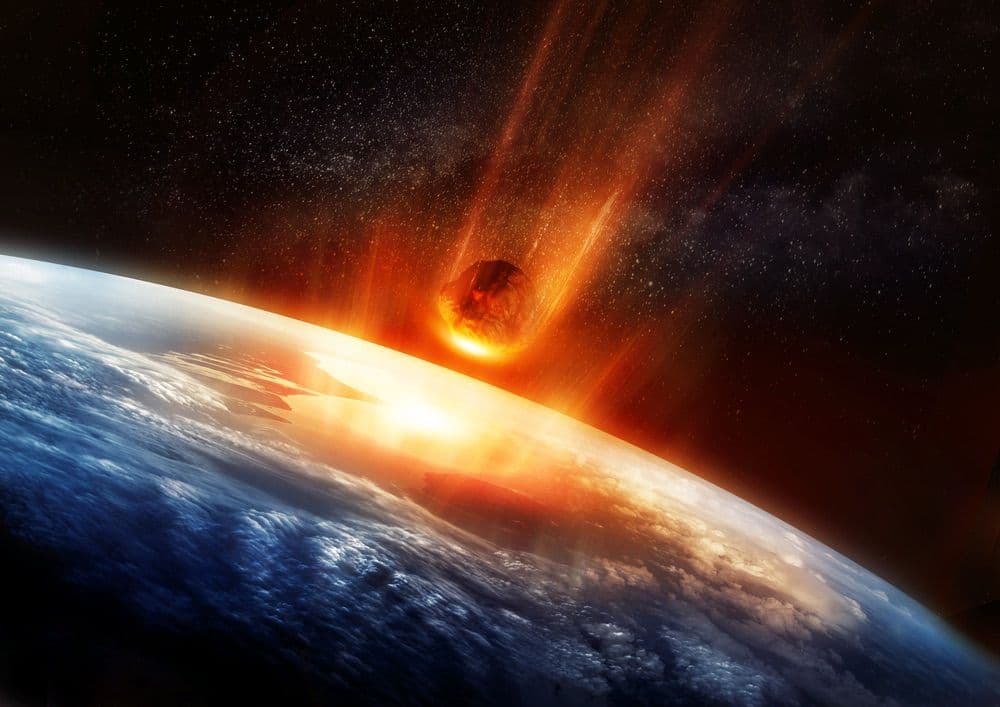
No at 74% reflects the low baseline probability of a 5 kt airburst or impact occurring in any single calendar year. Objects roughly 5–10 meters across, which can release around 5 kt upon atmospheric entry, arrive on average every several years according to CNEOS fireball data and size-frequency models, producing an implied annual chance well below 50% once detection gaps and geographic distribution are considered. NASA’s Sentry system and ESA risk lists currently show no known near-Earth objects on collision courses through 2026 or beyond, with all cumulative impact probabilities remaining orders of magnitude below 1%. Ongoing surveys continue to reduce the population of undetected small objects, while the absence of any recent close approaches or model updates elevating short-term risk reinforces trader consensus that 2026 is statistically more likely to pass without such an event.
Résumé expérimental généré par IA à partir des données Polymarket. Ceci n'est pas un conseil de trading et ne joue aucun rôle dans la résolution de ce marché. · Mis à jourFrappe météorique de 5kt en 2026 ?
Frappe météorique de 5kt en 2026 ?
Oui
$312,140 Vol.
$312,140 Vol.
Oui
$312,140 Vol.
$312,140 Vol.
The object must be classified as a natural meteoroid; events involving artificial objects or reentry vehicles do not qualify.
The primary resolution source will be the NASA JPL Fireball and Bolide Data repository: https://cneos.jpl.nasa.gov/fireballs/. The relevant field for determining impact energy is the “Impact Energy (kt)” column. If this dataset has not been updated to include all relevant dates by February 28, 2027, or if the NASA JPL Fireball and Bolide Data repository becomes permanently unavailable, this market may resolve based on a consensus of credible sources including the European Space Agency (ESA), the International Asteroid Warning Network (IAWN), the U.S. Department of Defense, or credible reporting of a scientific consensus, such as a NASA press release.
Marché ouvert : Dec 31, 2025, 12:04 PM ET
Resolver
0x65070BE91...The object must be classified as a natural meteoroid; events involving artificial objects or reentry vehicles do not qualify.
The primary resolution source will be the NASA JPL Fireball and Bolide Data repository: https://cneos.jpl.nasa.gov/fireballs/. The relevant field for determining impact energy is the “Impact Energy (kt)” column. If this dataset has not been updated to include all relevant dates by February 28, 2027, or if the NASA JPL Fireball and Bolide Data repository becomes permanently unavailable, this market may resolve based on a consensus of credible sources including the European Space Agency (ESA), the International Asteroid Warning Network (IAWN), the U.S. Department of Defense, or credible reporting of a scientific consensus, such as a NASA press release.
Resolver
0x65070BE91...No at 74% reflects the low baseline probability of a 5 kt airburst or impact occurring in any single calendar year. Objects roughly 5–10 meters across, which can release around 5 kt upon atmospheric entry, arrive on average every several years according to CNEOS fireball data and size-frequency models, producing an implied annual chance well below 50% once detection gaps and geographic distribution are considered. NASA’s Sentry system and ESA risk lists currently show no known near-Earth objects on collision courses through 2026 or beyond, with all cumulative impact probabilities remaining orders of magnitude below 1%. Ongoing surveys continue to reduce the population of undetected small objects, while the absence of any recent close approaches or model updates elevating short-term risk reinforces trader consensus that 2026 is statistically more likely to pass without such an event.
Résumé expérimental généré par IA à partir des données Polymarket. Ceci n'est pas un conseil de trading et ne joue aucun rôle dans la résolution de ce marché. · Mis à jour
Méfiez-vous des liens externes.
Méfiez-vous des liens externes.
Questions fréquentes