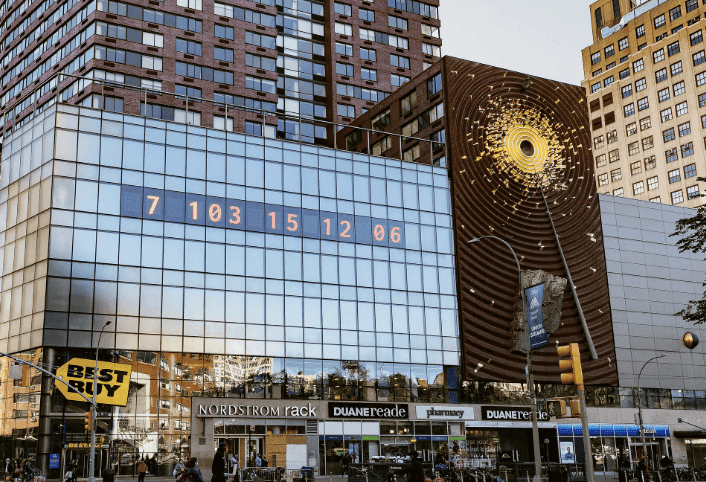
icon for Will the Climate Clock's 1.5°C deadline change by...?

Will the Climate Clock's 1.5°C deadline change by...?

icon for Will the Climate Clock's 1.5°C deadline change by...?

Will the Climate Clock's 1.5°C deadline change by...?

10% peluang
Polymarket

$12,623 Vol.

10% peluang
Polymarket

$12,623 Vol.

Each market asks whether the “Deadline” to limit global warming to 1.5°C shown by the Climate Clock (https://climateclock.world) will change before that market's listed date. A market resolves to “Yes” if, at any point on or before its listed date, 11:59 PM ET, the Climate Clock's published 1.5°C Deadline is more than 30 days earlier or more than 30 days later than July 22, 2029. Otherwise, that market resolves to “No”. The Climate Clock's 1.5°C Deadline is published as a machine-readable timestamp in its public data feed at https://api.climateclock.world/v2/clock.json (the “timestamp” value of the carbon-deadline module), which is the same target the on-site countdown at https://climateclock.world displays. As of this market's creation, that Deadline is July 22, 2029 (timestamp 2029-07-22T16:00:00+00:00). The ordinary second-by-second ticking of the countdown toward the Deadline does not constitute a change; only a change to the published Deadline date itself qualifies. Because a qualifying change is permanent once published, every market with a listed date on or after the change will resolve “Yes”, and markets whose listed date has already passed without a qualifying change will have resolved “No”. If the Climate Clock and its public data feed both become permanently unavailable before a qualifying change is published, all unresolved markets will resolve to “No”.Traders see a 90.5% implied probability that the Climate Clock's 1.5°C deadline will remain July 22, 2029, through December 31, 2026, because its underlying carbon budget derives from the stable IPCC AR6 Working Group I estimate of roughly 400 GtCO₂ remaining from 2020 at 67% probability, divided by consistent annual emissions near 42 GtCO₂. Recent Global Carbon Project observations and 2026 stocktakes confirm emissions continue at expected rates without abrupt acceleration or mitigation sufficient to trigger a recalculation by the Mercator Research Institute. No major IPCC assessment or revised carbon budget is scheduled before late 2026. A new comprehensive report, sharp global emissions drop, or updated observational datasets could still shift the deadline, though current evidence indicates low likelihood of such changes within the market window.

Each market asks whether the “Deadline” to limit global warming to 1.5°C shown by the Climate Clock (https://climateclock.world) will change before that market's listed date.

A market resolves to “Yes” if, at any point on or before its listed date, 11:59 PM ET, the Climate Clock's published 1.5°C Deadline is more than 30 days earlier or more than 30 days later than July 22, 2029. Otherwise, that market resolves to “No”.

The Climate Clock's 1.5°C Deadline is published as a machine-readable timestamp in its public data feed at https://api.climateclock.world/v2/clock.json (the “timestamp” value of the carbon-deadline module), which is the same target the on-site countdown at https://climateclock.world displays. As of this market's creation, that Deadline is July 22, 2029 (timestamp 2029-07-22T16:00:00+00:00). The ordinary second-by-second ticking of the countdown toward the Deadline does not constitute a change; only a change to the published Deadline date itself qualifies.

Because a qualifying change is permanent once published, every market with a listed date on or after the change will resolve “Yes”, and markets whose listed date has already passed without a qualifying change will have resolved “No”. If the Climate Clock and its public data feed both become permanently unavailable before a qualifying change is published, all unresolved markets will resolve to “No”.
Volume
$12,623
Tanggal Berakhir
Dec 31, 2029
Pasar Dibuka
Aug 19, 2026, 6:40 PM ET
Each market asks whether the “Deadline” to limit global warming to 1.5°C shown by the Climate Clock (https://climateclock.world) will change before that market's listed date. A market resolves to “Yes” if, at any point on or before its listed date, 11:59 PM ET, the Climate Clock's published 1.5°C Deadline is more than 30 days earlier or more than 30 days later than July 22, 2029. Otherwise, that market resolves to “No”. The Climate Clock's 1.5°C Deadline is published as a machine-readable timestamp in its public data feed at https://api.climateclock.world/v2/clock.json (the “timestamp” value of the carbon-deadline module), which is the same target the on-site countdown at https://climateclock.world displays. As of this market's creation, that Deadline is July 22, 2029 (timestamp 2029-07-22T16:00:00+00:00). The ordinary second-by-second ticking of the countdown toward the Deadline does not constitute a change; only a change to the published Deadline date itself qualifies. Because a qualifying change is permanent once published, every market with a listed date on or after the change will resolve “Yes”, and markets whose listed date has already passed without a qualifying change will have resolved “No”. If the Climate Clock and its public data feed both become permanently unavailable before a qualifying change is published, all unresolved markets will resolve to “No”.
Each market asks whether the “Deadline” to limit global warming to 1.5°C shown by the Climate Clock (https://climateclock.world) will change before that market's listed date. A market resolves to “Yes” if, at any point on or before its listed date, 11:59 PM ET, the Climate Clock's published 1.5°C Deadline is more than 30 days earlier or more than 30 days later than July 22, 2029. Otherwise, that market resolves to “No”. The Climate Clock's 1.5°C Deadline is published as a machine-readable timestamp in its public data feed at https://api.climateclock.world/v2/clock.json (the “timestamp” value of the carbon-deadline module), which is the same target the on-site countdown at https://climateclock.world displays. As of this market's creation, that Deadline is July 22, 2029 (timestamp 2029-07-22T16:00:00+00:00). The ordinary second-by-second ticking of the countdown toward the Deadline does not constitute a change; only a change to the published Deadline date itself qualifies. Because a qualifying change is permanent once published, every market with a listed date on or after the change will resolve “Yes”, and markets whose listed date has already passed without a qualifying change will have resolved “No”. If the Climate Clock and its public data feed both become permanently unavailable before a qualifying change is published, all unresolved markets will resolve to “No”.Traders see a 90.5% implied probability that the Climate Clock's 1.5°C deadline will remain July 22, 2029, through December 31, 2026, because its underlying carbon budget derives from the stable IPCC AR6 Working Group I estimate of roughly 400 GtCO₂ remaining from 2020 at 67% probability, divided by consistent annual emissions near 42 GtCO₂. Recent Global Carbon Project observations and 2026 stocktakes confirm emissions continue at expected rates without abrupt acceleration or mitigation sufficient to trigger a recalculation by the Mercator Research Institute. No major IPCC assessment or revised carbon budget is scheduled before late 2026. A new comprehensive report, sharp global emissions drop, or updated observational datasets could still shift the deadline, though current evidence indicates low likelihood of such changes within the market window.

Each market asks whether the “Deadline” to limit global warming to 1.5°C shown by the Climate Clock (https://climateclock.world) will change before that market's listed date.

A market resolves to “Yes” if, at any point on or before its listed date, 11:59 PM ET, the Climate Clock's published 1.5°C Deadline is more than 30 days earlier or more than 30 days later than July 22, 2029. Otherwise, that market resolves to “No”.

The Climate Clock's 1.5°C Deadline is published as a machine-readable timestamp in its public data feed at https://api.climateclock.world/v2/clock.json (the “timestamp” value of the carbon-deadline module), which is the same target the on-site countdown at https://climateclock.world displays. As of this market's creation, that Deadline is July 22, 2029 (timestamp 2029-07-22T16:00:00+00:00). The ordinary second-by-second ticking of the countdown toward the Deadline does not constitute a change; only a change to the published Deadline date itself qualifies.

Because a qualifying change is permanent once published, every market with a listed date on or after the change will resolve “Yes”, and markets whose listed date has already passed without a qualifying change will have resolved “No”. If the Climate Clock and its public data feed both become permanently unavailable before a qualifying change is published, all unresolved markets will resolve to “No”.
Volume
$12,623
Tanggal Berakhir
Jan 1, 2027
Pasar Dibuka
Aug 19, 2026, 6:40 PM ET
Each market asks whether the “Deadline” to limit global warming to 1.5°C shown by the Climate Clock (https://climateclock.world) will change before that market's listed date. A market resolves to “Yes” if, at any point on or before its listed date, 11:59 PM ET, the Climate Clock's published 1.5°C Deadline is more than 30 days earlier or more than 30 days later than July 22, 2029. Otherwise, that market resolves to “No”. The Climate Clock's 1.5°C Deadline is published as a machine-readable timestamp in its public data feed at https://api.climateclock.world/v2/clock.json (the “timestamp” value of the carbon-deadline module), which is the same target the on-site countdown at https://climateclock.world displays. As of this market's creation, that Deadline is July 22, 2029 (timestamp 2029-07-22T16:00:00+00:00). The ordinary second-by-second ticking of the countdown toward the Deadline does not constitute a change; only a change to the published Deadline date itself qualifies. Because a qualifying change is permanent once published, every market with a listed date on or after the change will resolve “Yes”, and markets whose listed date has already passed without a qualifying change will have resolved “No”. If the Climate Clock and its public data feed both become permanently unavailable before a qualifying change is published, all unresolved markets will resolve to “No”.

Hati-hati dengan link eksternal.

Pertanyaan yang Sering Diajukan

"Will the Climate Clock's 1.5°C deadline change by...?" adalah pasar prediksi di Polymarket di mana trader membeli dan menjual saham "Ya" atau "Tidak" berdasarkan apakah mereka yakin event ini akan terjadi. Probabilitas crowd-sourced saat ini adalah 10% untuk "Yes." Misalnya, jika "Ya" dihargai 10¢, pasar secara kolektif memberikan peluang 10% bahwa event ini akan terjadi. Peluang ini bergeser terus-menerus saat trader bereaksi terhadap perkembangan dan informasi baru. Saham dengan hasil yang benar bisa ditukarkan seharga $1 setiap saham saat pasar diselesaikan.

Per hari ini, "Will the Climate Clock's 1.5°C deadline change by...?" telah menghasilkan $12.6K dalam total volume trading sejak pasar diluncurkan pada Aug 19, 2026. Tingkat aktivitas trading ini mencerminkan keterlibatan kuat dari komunitas Polymarket dan membantu memastikan bahwa peluang saat ini diinformasikan oleh kumpulan besar peserta pasar. Kamu bisa melacak pergerakan harga langsung dan trading di hasil apa pun langsung di halaman ini.

Untuk trading di "Will the Climate Clock's 1.5°C deadline change by...?," cukup pilih apakah kamu yakin jawabannya "Ya" atau "Tidak." Setiap sisi memiliki harga saat ini yang mencerminkan probabilitas tersirat pasar. Masukkan jumlah kamu dan klik "Trade." Jika kamu membeli saham "Ya" dan hasilnya diselesaikan sebagai "Ya," setiap saham membayar $1. Jika diselesaikan sebagai "Tidak," saham "Ya" kamu bernilai $0. Kamu juga bisa menjual sahammu kapan saja sebelum resolusi jika kamu ingin mengamankan keuntungan atau memotong kerugian.

Probabilitas saat ini untuk "Will the Climate Clock's 1.5°C deadline change by...?" adalah 10% untuk "Yes." Ini berarti keramaian Polymarket saat ini percaya ada peluang 10% bahwa event ini akan terjadi. Peluang ini diperbarui secara real-time berdasarkan trade aktual, memberikan sinyal yang terus diperbarui tentang apa yang diharapkan pasar.

Aturan resolusi untuk "Will the Climate Clock's 1.5°C deadline change by...?" mendefinisikan dengan tepat apa yang harus terjadi agar setiap hasil dinyatakan sebagai pemenang — termasuk sumber data resmi yang digunakan untuk menentukan hasilnya. Kamu bisa meninjau kriteria resolusi lengkap di bagian "Aturan" di halaman ini di atas komentar. Kami menyarankan membaca aturan dengan cermat sebelum trading, karena mereka menentukan kondisi tepat, kasus khusus, dan sumber yang mengatur bagaimana pasar ini diselesaikan.