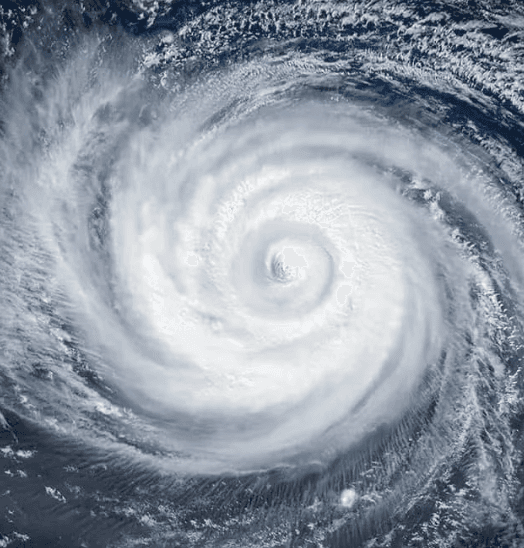
El Niño conditions are generating strong vertical wind shear across the Atlantic basin, suppressing tropical cyclone development and intensification during the peak of hurricane season. As of early August 2026, the National Hurricane Center reports no active systems, with only two named storms formed season-to-date against the 1991-2020 average of roughly seven by this point. Updated NOAA and Colorado State University outlooks project a below-normal season overall, with just 2-6 hurricanes expected through November and well-below-average U.S. landfall probabilities. These factors, combined with historically low Accumulated Cyclone Energy early in the year, underpin traders' strong consensus that no hurricane will reach the continental United States in the remaining weeks of August.
Résumé expérimental généré par IA à partir des données Polymarket. Ceci n'est pas un conseil de trading et ne joue aucun rôle dans la résolution de ce marché. · Mis à jourUn ouragan touchera-t-il terre aux États-Unis en août ?
Un ouragan touchera-t-il terre aux États-Unis en août ?
Oui
Oui
A hurricane is a tropical cyclone with maximum sustained winds of 74 mph or greater (Category 1 or higher on the Saffir-Simpson Hurricane Wind Scale), as described at https://www.nhc.noaa.gov/aboutsshws.php, and a hurricane landfall is said to occur when the hurricane's surface center intersects with the coastline, as described at https://www.nhc.noaa.gov/aboutgloss.shtml#LANDFALL. A storm must hold hurricane strength (Category 1 or higher on the Saffir-Simpson scale) at the moment its surface center intersects the coastline for that landfall to qualify.
This market may resolve based on the initial NHC advisory reporting a qualifying landfall regardless of any later advisory, retraction, best-track revision, or reanalysis that revises that storm's intensity downward at the time of landfall. However, if a subsequent advisory or correction identifies a qualifying landfall that was not reflected in initial reporting, that landfall will be added.
Marché ouvert : Jul 30, 2026, 2:36 PM ET
Resolver
0x65070BE91...A hurricane is a tropical cyclone with maximum sustained winds of 74 mph or greater (Category 1 or higher on the Saffir-Simpson Hurricane Wind Scale), as described at https://www.nhc.noaa.gov/aboutsshws.php, and a hurricane landfall is said to occur when the hurricane's surface center intersects with the coastline, as described at https://www.nhc.noaa.gov/aboutgloss.shtml#LANDFALL. A storm must hold hurricane strength (Category 1 or higher on the Saffir-Simpson scale) at the moment its surface center intersects the coastline for that landfall to qualify.
This market may resolve based on the initial NHC advisory reporting a qualifying landfall regardless of any later advisory, retraction, best-track revision, or reanalysis that revises that storm's intensity downward at the time of landfall. However, if a subsequent advisory or correction identifies a qualifying landfall that was not reflected in initial reporting, that landfall will be added.
Resolver
0x65070BE91...El Niño conditions are generating strong vertical wind shear across the Atlantic basin, suppressing tropical cyclone development and intensification during the peak of hurricane season. As of early August 2026, the National Hurricane Center reports no active systems, with only two named storms formed season-to-date against the 1991-2020 average of roughly seven by this point. Updated NOAA and Colorado State University outlooks project a below-normal season overall, with just 2-6 hurricanes expected through November and well-below-average U.S. landfall probabilities. These factors, combined with historically low Accumulated Cyclone Energy early in the year, underpin traders' strong consensus that no hurricane will reach the continental United States in the remaining weeks of August.
Résumé expérimental généré par IA à partir des données Polymarket. Ceci n'est pas un conseil de trading et ne joue aucun rôle dans la résolution de ce marché. · Mis à jour


Méfiez-vous des liens externes.
Méfiez-vous des liens externes.
Questions fréquentes