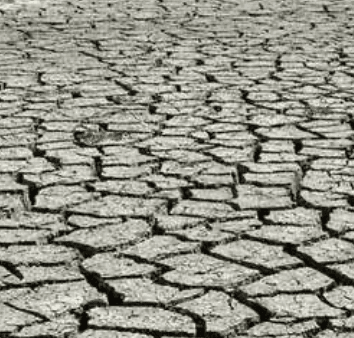
**Trader sentiment for the number of states in D4 (Exceptional Drought) during the week of September 15, 2026, remains evenly balanced across ranges because current US Drought Monitor data show limited but persistent D4 coverage amid rapidly evolving flash drought conditions.** As of early September, D4 occupies about 1.4% of U.S. area, concentrated in pockets of the central and southern Plains, Nebraska, and Colorado, driven by short-term precipitation deficits, above-normal temperatures, and high evapotranspiration rates that intensified conditions from Texas northeastward. Short-range forecasts indicate mostly dry weather through mid-month in parts of the central U.S., supporting potential expansion or persistence of D4, while CPC outlooks favor above-normal precipitation in other regions that could bring localized improvements. This divergence in precipitation timing and intensity, combined with the binary nature of D4 thresholds on the USDM scale, creates genuine uncertainty ahead of the next map release.
Résumé expérimental généré par IA à partir des données Polymarket. Ceci n'est pas un conseil de trading et ne joue aucun rôle dans la résolution de ce marché. · Mis à jourCombien d'États seront en D4 (sécheresse exceptionnelle) — semaine du 15 septembre 2026 ?
Combien d'États seront en D4 (sécheresse exceptionnelle) — semaine du 15 septembre 2026 ?
0 État 50%
1 à 2 États 50%
3 à 4 États 50%
5 à 6 États 50%
0 État
50%
1 à 2 États
50%
3 à 4 États
50%
5 à 6 États
50%
7 à 9 États
50%
10 États ou plus
50%
0 État 50%
1 à 2 États 50%
3 à 4 États 50%
5 à 6 États 50%
0 État
50%
1 à 2 États
50%
3 à 4 États
50%
5 à 6 États
50%
7 à 9 États
50%
10 États ou plus
50%
Brackets: 0 / 1-2 / 3-4 / 5-6 / 7-9 / 10+. Exactly one bracket resolves "Yes".
The count ranges over all 48 coterminous states — the 48 states excluding Alaska and Hawaii. The District of Columbia and U.S. territories are not considered.
Each USDM release covers the seven-day period ending Tuesday at 8:00 AM ET and is published the following Thursday.
Resolution is based on the first published US Drought Monitor release for the listed week. Subsequent revisions will not be considered; the first published release is final.
If the US Drought Monitor has not been published by 11:59 PM ET on the day following the scheduled publication date, this market will resolve to the "0 states" bracket.
The resolution source for this market is the US Drought Monitor at droughtmonitor.unl.edu.
Marché ouvert : Sep 10, 2026, 9:00 AM ET
Source de résolution
https://droughtmonitor.unl.edu/DmData/DataTables.aspxRésolveur
0x69c47De9D...Brackets: 0 / 1-2 / 3-4 / 5-6 / 7-9 / 10+. Exactly one bracket resolves "Yes".
The count ranges over all 48 coterminous states — the 48 states excluding Alaska and Hawaii. The District of Columbia and U.S. territories are not considered.
Each USDM release covers the seven-day period ending Tuesday at 8:00 AM ET and is published the following Thursday.
Resolution is based on the first published US Drought Monitor release for the listed week. Subsequent revisions will not be considered; the first published release is final.
If the US Drought Monitor has not been published by 11:59 PM ET on the day following the scheduled publication date, this market will resolve to the "0 states" bracket.
The resolution source for this market is the US Drought Monitor at droughtmonitor.unl.edu.
Source de résolution
https://droughtmonitor.unl.edu/DmData/DataTables.aspxRésolveur
0x69c47De9D...**Trader sentiment for the number of states in D4 (Exceptional Drought) during the week of September 15, 2026, remains evenly balanced across ranges because current US Drought Monitor data show limited but persistent D4 coverage amid rapidly evolving flash drought conditions.** As of early September, D4 occupies about 1.4% of U.S. area, concentrated in pockets of the central and southern Plains, Nebraska, and Colorado, driven by short-term precipitation deficits, above-normal temperatures, and high evapotranspiration rates that intensified conditions from Texas northeastward. Short-range forecasts indicate mostly dry weather through mid-month in parts of the central U.S., supporting potential expansion or persistence of D4, while CPC outlooks favor above-normal precipitation in other regions that could bring localized improvements. This divergence in precipitation timing and intensity, combined with the binary nature of D4 thresholds on the USDM scale, creates genuine uncertainty ahead of the next map release.
Résumé expérimental généré par IA à partir des données Polymarket. Ceci n'est pas un conseil de trading et ne joue aucun rôle dans la résolution de ce marché. · Mis à jour
Méfiez-vous des liens externes.
Méfiez-vous des liens externes.
Questions fréquentes