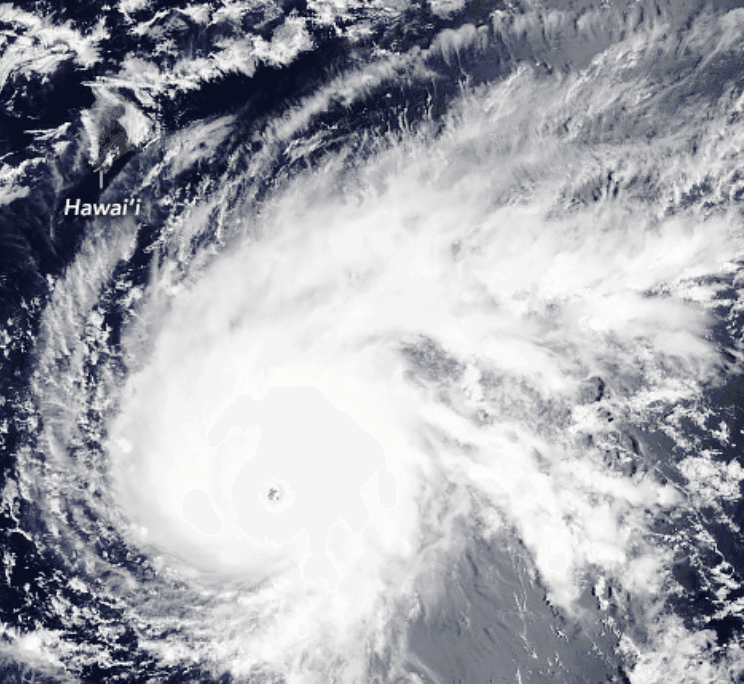
Hawaii’s historically low rate of direct hurricane landfalls—only two recorded since 1950—anchors trader sentiment favoring “No” at 72.5% for the remainder of the 2026 season. Even with NOAA’s above-normal Central Pacific outlook (5–13 tropical cyclones) driven by El Niño conditions that favor genesis, most systems track north or weaken before reaching the islands due to steering patterns, cooler surrounding waters, and wind shear. Recent examples include Hurricane Fausto, which passed well north as a weakening tropical storm in late July, and ongoing model guidance showing only moderate threats near mid-August without confirmed landfall trajectories. Traders weigh these climatological barriers and short-term forecast uncertainty heavily against the slim odds of a rare direct hit before year-end.
Resumen experimental generado por IA con datos de Polymarket. Esto no es asesoramiento de trading y no influye en cómo se resuelve este mercado. · Actualizado¿Un huracán tocará tierra en Hawái antes de 2027?
¿Un huracán tocará tierra en Hawái antes de 2027?
Sí
Sí
A hurricane is a tropical cyclone with maximum sustained winds of 74 mph or greater (Category 1 or higher on the Saffir-Simpson Hurricane Wind Scale), as described at https://www.nhc.noaa.gov/aboutsshws.php, and a hurricane landfall is said to occur when the hurricane's surface center intersects with the coastline, as described at https://www.nhc.noaa.gov/aboutgloss.shtml#LANDFALL. A storm must hold hurricane strength (Category 1 or higher on the Saffir-Simpson scale) at the moment its surface center intersects the coastline for that landfall to qualify.
"Hawaii" means the entire State of Hawaii as recognized under U.S. law, including the main Hawaiian Islands (Hawaiʻi, Maui, Oʻahu, Kauaʻi, Molokaʻi, Lānaʻi, Niʻihau, and Kahoʻolawe) and the Northwestern Hawaiian Islands (including Midway Atoll and the Papahānaumokuākea Marine National Monument).
The wind speed at the moment of landfall will be determined from the CPHC advisory or Special Advisory in effect at the time closest to the reported landfall time; where no advisory covers that exact moment, the most recent advisory issued prior to landfall governs.
This market may resolve based on the initial CPHC advisory reporting a qualifying landfall regardless of any later advisory, retraction, best-track revision, or reanalysis that revises that storm's intensity downward at the time of landfall. However, if a subsequent advisory or correction identifies a qualifying landfall that was not reflected in initial reporting, this market will resolve to "Yes" based on that correction.
Mercado abierto: Jul 24, 2026, 11:28 AM ET
Resolver
0x65070BE91...A hurricane is a tropical cyclone with maximum sustained winds of 74 mph or greater (Category 1 or higher on the Saffir-Simpson Hurricane Wind Scale), as described at https://www.nhc.noaa.gov/aboutsshws.php, and a hurricane landfall is said to occur when the hurricane's surface center intersects with the coastline, as described at https://www.nhc.noaa.gov/aboutgloss.shtml#LANDFALL. A storm must hold hurricane strength (Category 1 or higher on the Saffir-Simpson scale) at the moment its surface center intersects the coastline for that landfall to qualify.
"Hawaii" means the entire State of Hawaii as recognized under U.S. law, including the main Hawaiian Islands (Hawaiʻi, Maui, Oʻahu, Kauaʻi, Molokaʻi, Lānaʻi, Niʻihau, and Kahoʻolawe) and the Northwestern Hawaiian Islands (including Midway Atoll and the Papahānaumokuākea Marine National Monument).
The wind speed at the moment of landfall will be determined from the CPHC advisory or Special Advisory in effect at the time closest to the reported landfall time; where no advisory covers that exact moment, the most recent advisory issued prior to landfall governs.
This market may resolve based on the initial CPHC advisory reporting a qualifying landfall regardless of any later advisory, retraction, best-track revision, or reanalysis that revises that storm's intensity downward at the time of landfall. However, if a subsequent advisory or correction identifies a qualifying landfall that was not reflected in initial reporting, this market will resolve to "Yes" based on that correction.
Resolver
0x65070BE91...Hawaii’s historically low rate of direct hurricane landfalls—only two recorded since 1950—anchors trader sentiment favoring “No” at 72.5% for the remainder of the 2026 season. Even with NOAA’s above-normal Central Pacific outlook (5–13 tropical cyclones) driven by El Niño conditions that favor genesis, most systems track north or weaken before reaching the islands due to steering patterns, cooler surrounding waters, and wind shear. Recent examples include Hurricane Fausto, which passed well north as a weakening tropical storm in late July, and ongoing model guidance showing only moderate threats near mid-August without confirmed landfall trajectories. Traders weigh these climatological barriers and short-term forecast uncertainty heavily against the slim odds of a rare direct hit before year-end.
Resumen experimental generado por IA con datos de Polymarket. Esto no es asesoramiento de trading y no influye en cómo se resuelve este mercado. · Actualizado

Cuidado con los enlaces externos.
Cuidado con los enlaces externos.
Preguntas frecuentes