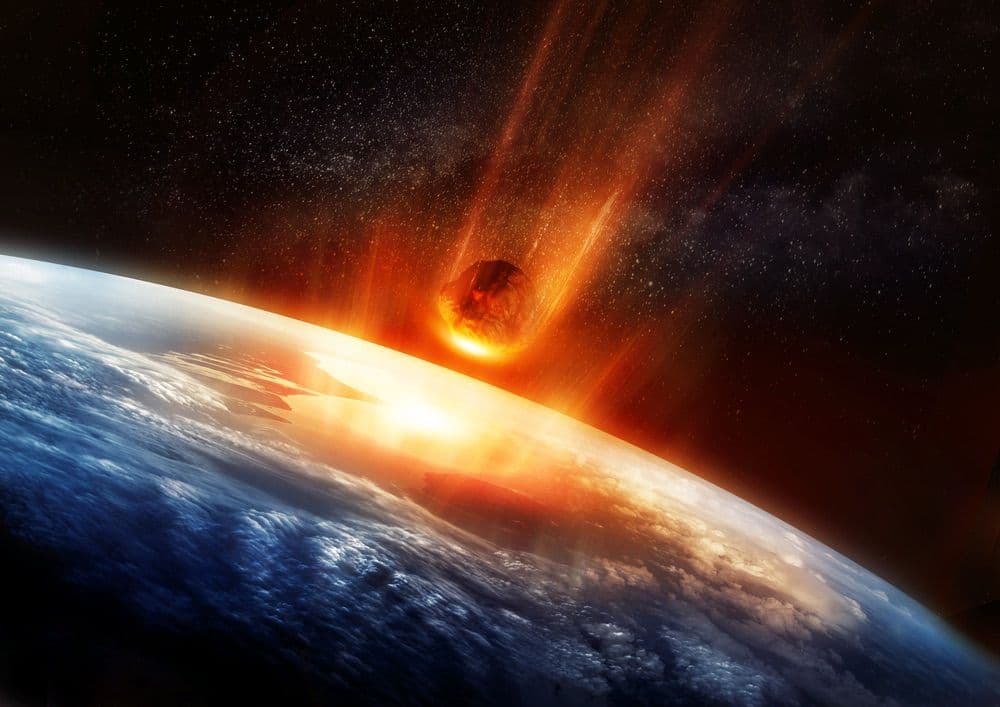
icon for ¿Golpe de meteoro de 1 megatón en 2026?

¿Golpe de meteoro de 1 megatón en 2026?

icon for ¿Golpe de meteoro de 1 megatón en 2026?

¿Golpe de meteoro de 1 megatón en 2026?

2% probabilidad
Polymarket

$116,334 Vol.

2% probabilidad
Polymarket

$116,334 Vol.

This market will resolve to "Yes" if a natural meteoroid (bolide) explodes in Earth's atmosphere with a total impact energy greater than or equal to 1 megaton (1000 kilotons) of TNT equivalent between January 1 and December 31, 2026, 11:59 PM ET. Otherwise, this market will resolve to “No”. The object must be classified as a natural meteoroid; events involving artificial objects or reentry vehicles do not qualify. The primary resolution source will be the NASA JPL Fireball and Bolide Data repository: https://cneos.jpl.nasa.gov/fireballs/. The relevant field for determining impact energy is the “Impact Energy (kt)” column. If this dataset has not been updated to include all relevant dates by February 28, 2027, or if the NASA JPL Fireball and Bolide Data repository becomes permanently unavailable, this market may resolve based on a consensus of credible sources including the European Space Agency (ESA), the International Asteroid Warning Network (IAWN), the U.S. Department of Defense, or credible reporting of a scientific consensus, such as a NASA press release.Traders assign a 98.5% implied probability to “No” for a 1-megaton meteor strike in 2026 because NASA’s Sentry and ESA’s NEODyS systems, along with ongoing optical and radar surveys, show no known near-Earth object on an impact trajectory capable of releasing that energy. Continuous monitoring of the catalogued population, combined with rapid follow-up of new detections, has ruled out threats of this scale well in advance. The absence of any credible close-approach warnings or impact-probability updates through mid-2026 reinforces the consensus. While an undetected small body or last-minute orbital revision could theoretically alter the outlook, current survey completeness and modeling precision make such surprises extremely unlikely before year-end.

This market will resolve to "Yes" if a natural meteoroid (bolide) explodes in Earth's atmosphere with a total impact energy greater than or equal to 1 megaton (1000 kilotons) of TNT equivalent between January 1 and December 31, 2026, 11:59 PM ET. Otherwise, this market will resolve to “No”.

The object must be classified as a natural meteoroid; events involving artificial objects or reentry vehicles do not qualify.

The primary resolution source will be the NASA JPL Fireball and Bolide Data repository: https://cneos.jpl.nasa.gov/fireballs/. The relevant field for determining impact energy is the “Impact Energy (kt)” column. If this dataset has not been updated to include all relevant dates by February 28, 2027, or if the NASA JPL Fireball and Bolide Data repository becomes permanently unavailable, this market may resolve based on a consensus of credible sources including the European Space Agency (ESA), the International Asteroid Warning Network (IAWN), the U.S. Department of Defense, or credible reporting of a scientific consensus, such as a NASA press release.
Volumen
$116,334
Fecha de finalización
31 dic 2026
Mercado abierto
Jan 2, 2026, 2:24 PM ET
This market will resolve to "Yes" if a natural meteoroid (bolide) explodes in Earth's atmosphere with a total impact energy greater than or equal to 1 megaton (1000 kilotons) of TNT equivalent between January 1 and December 31, 2026, 11:59 PM ET. Otherwise, this market will resolve to “No”. The object must be classified as a natural meteoroid; events involving artificial objects or reentry vehicles do not qualify. The primary resolution source will be the NASA JPL Fireball and Bolide Data repository: https://cneos.jpl.nasa.gov/fireballs/. The relevant field for determining impact energy is the “Impact Energy (kt)” column. If this dataset has not been updated to include all relevant dates by February 28, 2027, or if the NASA JPL Fireball and Bolide Data repository becomes permanently unavailable, this market may resolve based on a consensus of credible sources including the European Space Agency (ESA), the International Asteroid Warning Network (IAWN), the U.S. Department of Defense, or credible reporting of a scientific consensus, such as a NASA press release.
This market will resolve to "Yes" if a natural meteoroid (bolide) explodes in Earth's atmosphere with a total impact energy greater than or equal to 1 megaton (1000 kilotons) of TNT equivalent between January 1 and December 31, 2026, 11:59 PM ET. Otherwise, this market will resolve to “No”. The object must be classified as a natural meteoroid; events involving artificial objects or reentry vehicles do not qualify. The primary resolution source will be the NASA JPL Fireball and Bolide Data repository: https://cneos.jpl.nasa.gov/fireballs/. The relevant field for determining impact energy is the “Impact Energy (kt)” column. If this dataset has not been updated to include all relevant dates by February 28, 2027, or if the NASA JPL Fireball and Bolide Data repository becomes permanently unavailable, this market may resolve based on a consensus of credible sources including the European Space Agency (ESA), the International Asteroid Warning Network (IAWN), the U.S. Department of Defense, or credible reporting of a scientific consensus, such as a NASA press release.Traders assign a 98.5% implied probability to “No” for a 1-megaton meteor strike in 2026 because NASA’s Sentry and ESA’s NEODyS systems, along with ongoing optical and radar surveys, show no known near-Earth object on an impact trajectory capable of releasing that energy. Continuous monitoring of the catalogued population, combined with rapid follow-up of new detections, has ruled out threats of this scale well in advance. The absence of any credible close-approach warnings or impact-probability updates through mid-2026 reinforces the consensus. While an undetected small body or last-minute orbital revision could theoretically alter the outlook, current survey completeness and modeling precision make such surprises extremely unlikely before year-end.

This market will resolve to "Yes" if a natural meteoroid (bolide) explodes in Earth's atmosphere with a total impact energy greater than or equal to 1 megaton (1000 kilotons) of TNT equivalent between January 1 and December 31, 2026, 11:59 PM ET. Otherwise, this market will resolve to “No”.

The object must be classified as a natural meteoroid; events involving artificial objects or reentry vehicles do not qualify.

The primary resolution source will be the NASA JPL Fireball and Bolide Data repository: https://cneos.jpl.nasa.gov/fireballs/. The relevant field for determining impact energy is the “Impact Energy (kt)” column. If this dataset has not been updated to include all relevant dates by February 28, 2027, or if the NASA JPL Fireball and Bolide Data repository becomes permanently unavailable, this market may resolve based on a consensus of credible sources including the European Space Agency (ESA), the International Asteroid Warning Network (IAWN), the U.S. Department of Defense, or credible reporting of a scientific consensus, such as a NASA press release.
Volumen
$116,334
Fecha de finalización
31 dic 2026
Mercado abierto
Jan 2, 2026, 2:24 PM ET
This market will resolve to "Yes" if a natural meteoroid (bolide) explodes in Earth's atmosphere with a total impact energy greater than or equal to 1 megaton (1000 kilotons) of TNT equivalent between January 1 and December 31, 2026, 11:59 PM ET. Otherwise, this market will resolve to “No”. The object must be classified as a natural meteoroid; events involving artificial objects or reentry vehicles do not qualify. The primary resolution source will be the NASA JPL Fireball and Bolide Data repository: https://cneos.jpl.nasa.gov/fireballs/. The relevant field for determining impact energy is the “Impact Energy (kt)” column. If this dataset has not been updated to include all relevant dates by February 28, 2027, or if the NASA JPL Fireball and Bolide Data repository becomes permanently unavailable, this market may resolve based on a consensus of credible sources including the European Space Agency (ESA), the International Asteroid Warning Network (IAWN), the U.S. Department of Defense, or credible reporting of a scientific consensus, such as a NASA press release.

Cuidado con los enlaces externos.

Preguntas frecuentes

"¿Golpe de meteoro de 1 megatón en 2026?" es un mercado de predicción en Polymarket con 2 resultados posibles donde los operadores compran y venden acciones según lo que creen que sucederá. El resultado líder actual es "¿Impactará un meteorito de 1 megatón en 2026?" con 2%. Los precios reflejan probabilidades en tiempo real de la comunidad. Por ejemplo, una acción cotizada a 2¢ implica que el mercado colectivamente asigna una probabilidad de 2% a ese resultado. Estas probabilidades cambian continuamente a medida que los operadores reaccionan a nuevos desarrollos. Las acciones del resultado correcto son canjeables por $1 cada una tras la resolución del mercado.

A día de hoy, "¿Golpe de meteoro de 1 megatón en 2026?" ha generado $116.3K en volumen total de trading desde que el mercado se lanzó el Jan 2, 2026. Este nivel de actividad refleja un fuerte compromiso de la comunidad de Polymarket y ayuda a garantizar que las probabilidades actuales estén respaldadas por un amplio grupo de participantes del mercado. Puedes seguir los movimientos de precios en vivo y operar en cualquier resultado directamente en esta página.

Para operar en "¿Golpe de meteoro de 1 megatón en 2026?", explora los 2 resultados disponibles en esta página. Cada resultado muestra un precio actual que representa la probabilidad implícita del mercado. Para tomar una posición, selecciona el resultado que consideres más probable, elige "Sí" para operar a favor o "No" para operar en contra, introduce tu cantidad y haz clic en "Operar". Si tu resultado elegido es correcto cuando el mercado se resuelve, tus acciones de "Sí" pagan $1 cada una. Si es incorrecto, pagan $0. También puedes vender tus acciones en cualquier momento antes de la resolución.

Este es un mercado muy abierto. El líder actual para "¿Golpe de meteoro de 1 megatón en 2026?" es "¿Impactará un meteorito de 1 megatón en 2026?" con solo 2%. Sin ningún resultado con una mayoría clara, los operadores lo ven como altamente incierto, lo que puede presentar oportunidades de trading únicas. Estas probabilidades se actualizan en tiempo real, así que guarda esta página en marcadores.

Las reglas de resolución para "¿Golpe de meteoro de 1 megatón en 2026?" definen exactamente qué debe ocurrir para que cada resultado sea declarado ganador, incluyendo las fuentes de datos oficiales utilizadas para determinar el resultado. Puedes revisar los criterios de resolución completos en la sección "Reglas" en esta página sobre los comentarios. Recomendamos leer las reglas cuidadosamente antes de operar, ya que especifican las condiciones exactas, casos especiales y fuentes.