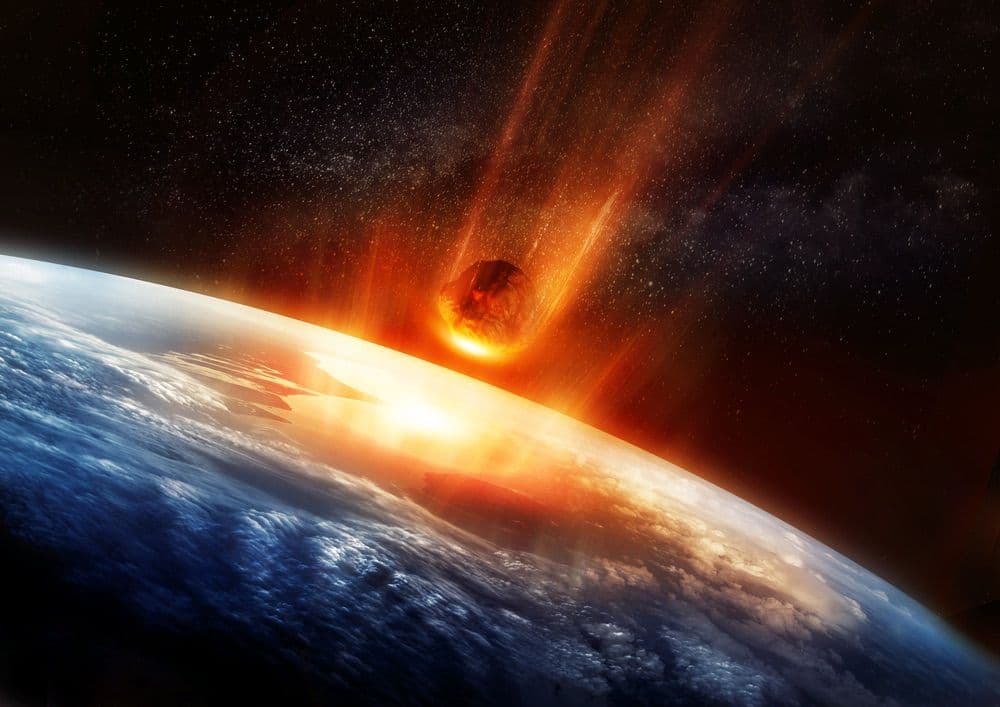
Current monitoring by NASA’s Center for Near-Earth Object Studies and JPL’s Sentry system shows no known near-Earth objects large enough to produce a 5-kiloton airburst on a collision trajectory for 2026, with upcoming close approaches such as 2026 PK remaining millions of miles distant. Small, undetected meter-scale meteoroids can generate 5 kt events when they explode in the atmosphere, yet historical frequency data indicate these occur only a few times per decade on average. Traders therefore assign a 69.5% implied probability to “No,” reflecting the absence of confirmed threats, ongoing observational completeness for larger bodies, and the statistical rarity of an undetected impactor delivering that energy threshold within a single calendar year.
Polymarket डेटा का संदर्भ देने वाला प्रयोगात्मक AI-जनरेटेड सारांश। यह ट्रेडिंग सलाह नहीं है और इस बाज़ार के समाधान में कोई भूमिका नहीं निभाता। · अपडेट किया गया2026 में 5kt उल्का हड़ताल?
2026 में 5kt उल्का हड़ताल?
हाँ
$312,010 वॉल्यूम
$312,010 वॉल्यूम
हाँ
$312,010 वॉल्यूम
$312,010 वॉल्यूम
The object must be classified as a natural meteoroid; events involving artificial objects or reentry vehicles do not qualify.
The primary resolution source will be the NASA JPL Fireball and Bolide Data repository: https://cneos.jpl.nasa.gov/fireballs/. The relevant field for determining impact energy is the “Impact Energy (kt)” column. If this dataset has not been updated to include all relevant dates by February 28, 2027, or if the NASA JPL Fireball and Bolide Data repository becomes permanently unavailable, this market may resolve based on a consensus of credible sources including the European Space Agency (ESA), the International Asteroid Warning Network (IAWN), the U.S. Department of Defense, or credible reporting of a scientific consensus, such as a NASA press release.
बाज़ार खुला: Dec 31, 2025, 12:04 PM ET
Resolver
0x65070BE91...The object must be classified as a natural meteoroid; events involving artificial objects or reentry vehicles do not qualify.
The primary resolution source will be the NASA JPL Fireball and Bolide Data repository: https://cneos.jpl.nasa.gov/fireballs/. The relevant field for determining impact energy is the “Impact Energy (kt)” column. If this dataset has not been updated to include all relevant dates by February 28, 2027, or if the NASA JPL Fireball and Bolide Data repository becomes permanently unavailable, this market may resolve based on a consensus of credible sources including the European Space Agency (ESA), the International Asteroid Warning Network (IAWN), the U.S. Department of Defense, or credible reporting of a scientific consensus, such as a NASA press release.
Resolver
0x65070BE91...Current monitoring by NASA’s Center for Near-Earth Object Studies and JPL’s Sentry system shows no known near-Earth objects large enough to produce a 5-kiloton airburst on a collision trajectory for 2026, with upcoming close approaches such as 2026 PK remaining millions of miles distant. Small, undetected meter-scale meteoroids can generate 5 kt events when they explode in the atmosphere, yet historical frequency data indicate these occur only a few times per decade on average. Traders therefore assign a 69.5% implied probability to “No,” reflecting the absence of confirmed threats, ongoing observational completeness for larger bodies, and the statistical rarity of an undetected impactor delivering that energy threshold within a single calendar year.
Polymarket डेटा का संदर्भ देने वाला प्रयोगात्मक AI-जनरेटेड सारांश। यह ट्रेडिंग सलाह नहीं है और इस बाज़ार के समाधान में कोई भूमिका नहीं निभाता। · अपडेट किया गया
बाहरी लिंक से सावधान रहें।
बाहरी लिंक से सावधान रहें।
अक्सर पूछे जाने वाले प्रश्न