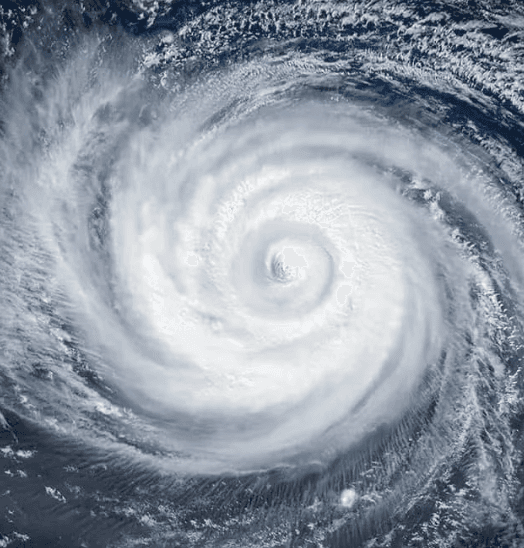
icon for Le super typhon Dolphin touchera-t-il terre à la force de catégorie 4 ou plus ?

Le super typhon Dolphin touchera-t-il terre à la force de catégorie 4 ou plus ?

icon for Le super typhon Dolphin touchera-t-il terre à la force de catégorie 4 ou plus ?

Le super typhon Dolphin touchera-t-il terre à la force de catégorie 4 ou plus ?

Oui

<1% chance
Polymarket

$16,912 Vol.

Oui

<1% chance
Polymarket

$16,912 Vol.

This market resolves "Yes" if Super Typhoon Dolphin makes landfall on any landmass while the most recently issued JMA advisory prior to the crossing shows maximum sustained wind speed near center of 105 knots or higher, corresponding approximately to Category 4 equivalent intensity on the Saffir-Simpson scale. Landfall is defined as the center of Dolphin's circulation physically crossing any coastline, as determined by the Japan Meteorological Agency's (JMA) position advisories (https://www.jma.go.jp/bosai/map.html#contents=typhoon&lang=en), or by credible international news reporting confirming landfall. The single JMA advisory in effect immediately prior to the observed crossing is authoritative for both position and intensity; no subsequent real-time advisory, reclassification, or post-season best-track reanalysis may retroactively change the outcome. JMA position advisories are the primary resolution source. If a JMA advisory plots the center on land, the market resolves based on that advisory's wind speed. If no JMA advisory plots the center on land but credible reporting confirms a crossing occurred between discrete advisory fixes, the intensity is taken from the most recently issued JMA advisory prior to the confirmed crossing time. This market resolves "No" if Dolphin makes landfall with the most recent prior JMA advisory showing maximum sustained winds below 105 knots, if Dolphin dissipates without making landfall on any territory, or if no landfall has physically occurred by the close of August 15, 2026.Typhoon Dolphin, having peaked as a Category 5-equivalent super typhoon with sustained winds near 165 mph in late July, has since undergone multiple eyewall replacement cycles and rapid weakening over cooler waters and increasing shear. As of August 9, 2026, Joint Typhoon Warning Center data place the system north of Taiwan with central pressure at 959 hPa and maximum winds around 75-85 mph, tracking northwest toward eastern China for expected landfall as a Category 1-equivalent or weaker system. Official forecasts from JTWC and NOAA-aligned models show continued decay before any mainland contact, rendering Category 4+ intensity at landfall statistically improbable. The near-certain market consensus on “No” reflects this observed intensity trend and model agreement, though an unusually rapid reintensification over anomalously warm East China Sea waters remains a low-probability outlier scenario.

This market resolves "Yes" if Super Typhoon Dolphin makes landfall on any landmass while the most recently issued JMA advisory prior to the crossing shows maximum sustained wind speed near center of 105 knots or higher, corresponding approximately to Category 4 equivalent intensity on the Saffir-Simpson scale. Landfall is defined as the center of Dolphin's circulation physically crossing any coastline, as determined by the Japan Meteorological Agency's (JMA) position advisories (https://www.jma.go.jp/bosai/map.html#contents=typhoon&lang=en), or by credible international news reporting confirming landfall.

The single JMA advisory in effect immediately prior to the observed crossing is authoritative for both position and intensity; no subsequent real-time advisory, reclassification, or post-season best-track reanalysis may retroactively change the outcome.

JMA position advisories are the primary resolution source. If a JMA advisory plots the center on land, the market resolves based on that advisory's wind speed. If no JMA advisory plots the center on land but credible reporting confirms a crossing occurred between discrete advisory fixes, the intensity is taken from the most recently issued JMA advisory prior to the confirmed crossing time.

This market resolves "No" if Dolphin makes landfall with the most recent prior JMA advisory showing maximum sustained winds below 105 knots, if Dolphin dissipates without making landfall on any territory, or if no landfall has physically occurred by the close of August 15, 2026.
Volume
$16,912
Marché ouvert
Jul 30, 2026, 4:58 PM ET
This market resolves "Yes" if Super Typhoon Dolphin makes landfall on any landmass while the most recently issued JMA advisory prior to the crossing shows maximum sustained wind speed near center of 105 knots or higher, corresponding approximately to Category 4 equivalent intensity on the Saffir-Simpson scale. Landfall is defined as the center of Dolphin's circulation physically crossing any coastline, as determined by the Japan Meteorological Agency's (JMA) position advisories (https://www.jma.go.jp/bosai/map.html#contents=typhoon&lang=en), or by credible international news reporting confirming landfall. The single JMA advisory in effect immediately prior to the observed crossing is authoritative for both position and intensity; no subsequent real-time advisory, reclassification, or post-season best-track reanalysis may retroactively change the outcome. JMA position advisories are the primary resolution source. If a JMA advisory plots the center on land, the market resolves based on that advisory's wind speed. If no JMA advisory plots the center on land but credible reporting confirms a crossing occurred between discrete advisory fixes, the intensity is taken from the most recently issued JMA advisory prior to the confirmed crossing time. This market resolves "No" if Dolphin makes landfall with the most recent prior JMA advisory showing maximum sustained winds below 105 knots, if Dolphin dissipates without making landfall on any territory, or if no landfall has physically occurred by the close of August 15, 2026.
This market resolves "Yes" if Super Typhoon Dolphin makes landfall on any landmass while the most recently issued JMA advisory prior to the crossing shows maximum sustained wind speed near center of 105 knots or higher, corresponding approximately to Category 4 equivalent intensity on the Saffir-Simpson scale. Landfall is defined as the center of Dolphin's circulation physically crossing any coastline, as determined by the Japan Meteorological Agency's (JMA) position advisories (https://www.jma.go.jp/bosai/map.html#contents=typhoon&lang=en), or by credible international news reporting confirming landfall. The single JMA advisory in effect immediately prior to the observed crossing is authoritative for both position and intensity; no subsequent real-time advisory, reclassification, or post-season best-track reanalysis may retroactively change the outcome. JMA position advisories are the primary resolution source. If a JMA advisory plots the center on land, the market resolves based on that advisory's wind speed. If no JMA advisory plots the center on land but credible reporting confirms a crossing occurred between discrete advisory fixes, the intensity is taken from the most recently issued JMA advisory prior to the confirmed crossing time. This market resolves "No" if Dolphin makes landfall with the most recent prior JMA advisory showing maximum sustained winds below 105 knots, if Dolphin dissipates without making landfall on any territory, or if no landfall has physically occurred by the close of August 15, 2026.Typhoon Dolphin, having peaked as a Category 5-equivalent super typhoon with sustained winds near 165 mph in late July, has since undergone multiple eyewall replacement cycles and rapid weakening over cooler waters and increasing shear. As of August 9, 2026, Joint Typhoon Warning Center data place the system north of Taiwan with central pressure at 959 hPa and maximum winds around 75-85 mph, tracking northwest toward eastern China for expected landfall as a Category 1-equivalent or weaker system. Official forecasts from JTWC and NOAA-aligned models show continued decay before any mainland contact, rendering Category 4+ intensity at landfall statistically improbable. The near-certain market consensus on “No” reflects this observed intensity trend and model agreement, though an unusually rapid reintensification over anomalously warm East China Sea waters remains a low-probability outlier scenario.

This market resolves "Yes" if Super Typhoon Dolphin makes landfall on any landmass while the most recently issued JMA advisory prior to the crossing shows maximum sustained wind speed near center of 105 knots or higher, corresponding approximately to Category 4 equivalent intensity on the Saffir-Simpson scale. Landfall is defined as the center of Dolphin's circulation physically crossing any coastline, as determined by the Japan Meteorological Agency's (JMA) position advisories (https://www.jma.go.jp/bosai/map.html#contents=typhoon&lang=en), or by credible international news reporting confirming landfall.

The single JMA advisory in effect immediately prior to the observed crossing is authoritative for both position and intensity; no subsequent real-time advisory, reclassification, or post-season best-track reanalysis may retroactively change the outcome.

JMA position advisories are the primary resolution source. If a JMA advisory plots the center on land, the market resolves based on that advisory's wind speed. If no JMA advisory plots the center on land but credible reporting confirms a crossing occurred between discrete advisory fixes, the intensity is taken from the most recently issued JMA advisory prior to the confirmed crossing time.

This market resolves "No" if Dolphin makes landfall with the most recent prior JMA advisory showing maximum sustained winds below 105 knots, if Dolphin dissipates without making landfall on any territory, or if no landfall has physically occurred by the close of August 15, 2026.
Volume
$16,912
Date de fin
16 août 2026
Marché ouvert
Jul 30, 2026, 4:58 PM ET
This market resolves "Yes" if Super Typhoon Dolphin makes landfall on any landmass while the most recently issued JMA advisory prior to the crossing shows maximum sustained wind speed near center of 105 knots or higher, corresponding approximately to Category 4 equivalent intensity on the Saffir-Simpson scale. Landfall is defined as the center of Dolphin's circulation physically crossing any coastline, as determined by the Japan Meteorological Agency's (JMA) position advisories (https://www.jma.go.jp/bosai/map.html#contents=typhoon&lang=en), or by credible international news reporting confirming landfall. The single JMA advisory in effect immediately prior to the observed crossing is authoritative for both position and intensity; no subsequent real-time advisory, reclassification, or post-season best-track reanalysis may retroactively change the outcome. JMA position advisories are the primary resolution source. If a JMA advisory plots the center on land, the market resolves based on that advisory's wind speed. If no JMA advisory plots the center on land but credible reporting confirms a crossing occurred between discrete advisory fixes, the intensity is taken from the most recently issued JMA advisory prior to the confirmed crossing time. This market resolves "No" if Dolphin makes landfall with the most recent prior JMA advisory showing maximum sustained winds below 105 knots, if Dolphin dissipates without making landfall on any territory, or if no landfall has physically occurred by the close of August 15, 2026.

Méfiez-vous des liens externes.

Questions fréquentes

« Le super typhon Dolphin touchera-t-il terre à la force de catégorie 4 ou plus ? » est un marché de prédiction sur Polymarket avec 2 résultats possibles où les traders achètent et vendent des parts selon ce qu'ils pensent qu'il se passera. Le résultat en tête actuel est « Le super typhon Dolphin touchera-t-il terre avec une intensité de catégorie 4 ou plus ? » à 1%. Les prix reflètent des probabilités en temps réel de la communauté. Par exemple, une part cotée à 1¢ implique que le marché attribue collectivement une probabilité de 1% à ce résultat. Ces cotes changent en permanence. Les parts du résultat correct sont échangeables contre $1 chacune lors de la résolution du marché.

À ce jour, « Le super typhon Dolphin touchera-t-il terre à la force de catégorie 4 ou plus ? » a généré $16.9K en volume total de trading depuis le lancement du marché le Jul 30, 2026. Ce niveau d'activité reflète un fort engagement de la communauté Polymarket et garantit que les cotes actuelles sont alimentées par un large bassin de participants. Vous pouvez suivre les mouvements de prix en direct et trader sur n'importe quel résultat directement sur cette page.

Pour trader sur « Le super typhon Dolphin touchera-t-il terre à la force de catégorie 4 ou plus ? », parcourez les 2 résultats disponibles sur cette page. Chaque résultat affiche un prix actuel représentant la probabilité implicite du marché. Pour prendre position, sélectionnez le résultat que vous estimez le plus probable, choisissez « Oui » pour trader en sa faveur ou « Non » pour trader contre, entrez votre montant et cliquez sur « Trader ». Si votre résultat choisi est correct lors de la résolution, vos parts « Oui » rapportent $1 chacune. S'il est incorrect, elles rapportent $0. Vous pouvez également vendre vos parts avant la résolution.

C'est un marché très ouvert. Le leader actuel pour « Le super typhon Dolphin touchera-t-il terre à la force de catégorie 4 ou plus ? » est « Le super typhon Dolphin touchera-t-il terre avec une intensité de catégorie 4 ou plus ? » à seulement 1%. Aucun résultat ne dominant clairement, les traders voient cela comme très incertain, ce qui peut présenter des opportunités de trading uniques. Ces cotes sont mises à jour en temps réel, alors ajoutez cette page à vos favoris.

Les règles de résolution de « Le super typhon Dolphin touchera-t-il terre à la force de catégorie 4 ou plus ? » définissent exactement ce qui doit se produire pour que chaque résultat soit déclaré gagnant, y compris les sources de données officielles utilisées pour déterminer le résultat. Vous pouvez consulter les critères de résolution complets dans la section « Règles » sur cette page au-dessus des commentaires. Nous recommandons de lire attentivement les règles avant de trader, car elles précisent les conditions exactes, les cas particuliers et les sources.