

Ongoing tensions in the Israel-Iran conflict, including the breakdown of the April 2026 ceasefire and renewed military exchanges in June and July, remain the dominant driver of trader views on airspace closure risks. Israeli authorities imposed broad civilian flight suspensions and restrictions multiple times following the February 28 strikes on Iran and subsequent Iranian missile and drone responses, with partial reopenings tied to temporary truces. Regional airspace disruptions in neighboring states, airline cancellations, and EASA warnings through September 2026 reflect persistent volatility from missile threats and proxy activity involving Hezbollah and other groups. Recent statements from Israeli officials emphasize efforts to maintain operations at Ben Gurion Airport despite capacity strains from military assets, while any fresh escalation could prompt new restrictions. Scheduled diplomatic or military developments in the coming weeks could shift assessments of near-term closure probability.
Résumé expérimental généré par IA à partir des données Polymarket. Ceci n'est pas un conseil de trading et ne joue aucun rôle dans la résolution de ce marché. · Mis à jour$28,762,193 Vol.
30 septembre
67%
$28,762,193 Vol.
30 septembre
67%
A “major closure” is defined as a broad closure, cancellation, or complete suspension of commercial aviation across the entirety of Israeli civilian airspace or a region encompassing a majority of Israeli civilian airspace, including commercial flights transiting, arriving in, and departing from that airspace. A qualifying closure must apply generally to all flights across Israel or a qualifying subset of Israeli airspace. Limited cancellations, delays, temporary ground stops or isolated regional closures will not qualify. Limited exceptions to a broad closure, however, will not disqualify such a closure from counting (e.g. exceptions for certain pre-approved flights may be permitted).
Warnings, No-Fly-Zones, flight suspensions, or other flight restrictions imposed by airlines or countries other than Israel will not be sufficient for a “Yes” resolution.
Airspace closures which occur solely due to weather conditions will not qualify.
The primary resolution source for this market will be official information from Israeli aviation authorities; however, a consensus of credible reporting may also be used.
Marché ouvert : Aug 18, 2026, 12:25 PM ET
Résolveur
0x65070BE91...A “major closure” is defined as a broad closure, cancellation, or complete suspension of commercial aviation across the entirety of Israeli civilian airspace or a region encompassing a majority of Israeli civilian airspace, including commercial flights transiting, arriving in, and departing from that airspace. A qualifying closure must apply generally to all flights across Israel or a qualifying subset of Israeli airspace. Limited cancellations, delays, temporary ground stops or isolated regional closures will not qualify. Limited exceptions to a broad closure, however, will not disqualify such a closure from counting (e.g. exceptions for certain pre-approved flights may be permitted).
Warnings, No-Fly-Zones, flight suspensions, or other flight restrictions imposed by airlines or countries other than Israel will not be sufficient for a “Yes” resolution.
Airspace closures which occur solely due to weather conditions will not qualify.
The primary resolution source for this market will be official information from Israeli aviation authorities; however, a consensus of credible reporting may also be used.
Résolveur
0x65070BE91...Ongoing tensions in the Israel-Iran conflict, including the breakdown of the April 2026 ceasefire and renewed military exchanges in June and July, remain the dominant driver of trader views on airspace closure risks. Israeli authorities imposed broad civilian flight suspensions and restrictions multiple times following the February 28 strikes on Iran and subsequent Iranian missile and drone responses, with partial reopenings tied to temporary truces. Regional airspace disruptions in neighboring states, airline cancellations, and EASA warnings through September 2026 reflect persistent volatility from missile threats and proxy activity involving Hezbollah and other groups. Recent statements from Israeli officials emphasize efforts to maintain operations at Ben Gurion Airport despite capacity strains from military assets, while any fresh escalation could prompt new restrictions. Scheduled diplomatic or military developments in the coming weeks could shift assessments of near-term closure probability.
Résumé expérimental généré par IA à partir des données Polymarket. Ceci n'est pas un conseil de trading et ne joue aucun rôle dans la résolution de ce marché. · Mis à jour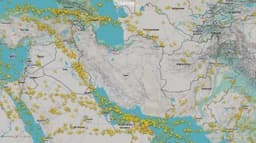


Méfiez-vous des liens externes.
Méfiez-vous des liens externes.
Questions fréquentes