
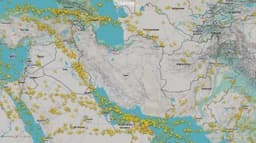
Ongoing US-Iran military tensions, including strikes on IRGC targets as recently as September 1, 2026, and the breakdown of the earlier ceasefire around the Strait of Hormuz, sustain elevated risks that keep Iranian airspace subject to restrictions. The Tehran FIR remains only partially open, with the western sector closed and eastern portions limited to minimal overflights by Iranian carriers; foreign operators continue to avoid the region under active EASA conflict-zone advisories and national NOTAMs extending through September 30. Intermittent full or western closures have occurred during prior escalation peaks in March and June 2026. Upcoming diplomatic or military developments could alter the status, though trader assessments reflect the current pattern of heightened but contained hostilities rather than immediate full shutdown.
Résumé expérimental généré par IA à partir des données Polymarket. Ceci n'est pas un conseil de trading et ne joue aucun rôle dans la résolution de ce marché. · Mis à jourFermeture totale de l'espace aérien iranien d'ici le... ?
Fermeture totale de l'espace aérien iranien d'ici le... ?
$9,265,794 Vol.
30 septembre
9%
31 décembre
27%
$9,265,794 Vol.
30 septembre
9%
31 décembre
27%
A “general closure” refers to a cancellation or suspension of aviation which is generally applicable to all commercial flights transiting Iranian airspace (“Tehran FIR”). A qualifying closure must apply generally to all of Iran or the Tehran FIR; limited cancellations, delays, or partial closures will not qualify. A closure which applies generally to commercial aviation across Iranian airspace, with limited exceptions for certain categories of flights, however, will qualify (e.g. exceptions for certain flights pre-approved by the Iranian Civil Aviation Authority may be permitted).
Qualifying previous examples include the February 28, 2026 total closure of Iranian airspace (https://www.iranintl.com/en/202602289115) and the January 2026 total closure of Iranian airspace except to international flights with express governmental permission (https://www.reuters.com/world/middle-east/iran-shuts-airspace-most-flights-flightradar24-says-2026-01-14/). Non-qualifying examples include the January 27, 2026 partial closure of Iranian airspace around the Strait of Hormuz (https://www.aa.com.tr/en/middle-east/iran-issues-airspace-notice-for-military-drills-near-strait-of-hormuz/3812508), the April 2024 closure of Iran’s western airspace (https://www.reuters.com/world/middle-east/iranian-airports-cancel-flights-until-monday-morning-2024-04-14/), and the January 25 - April 25, 2026 VFR (Visual Flight Rules) flights suspension which did not broadly close commercial aviation in Iran (https://www.intellinews.com/iran-suspends-general-aviation-and-vfr-flights-in-new-airspace-directive-421997/).
Warnings, No-Fly-Zones, or other flight restrictions imposed by airlines or countries other than Iran will not be sufficient for a “Yes” resolution.
Airspace closures which occur solely due to weather conditions, earthquakes, or volcanic eruptions, will not qualify.
The primary resolution sources for this market will be official information from Iranian aviation authorities and a consensus of credible reporting.
Marché ouvert : Jul 27, 2026, 1:36 PM ET
Résolveur
0x65070BE91...A “general closure” refers to a cancellation or suspension of aviation which is generally applicable to all commercial flights transiting Iranian airspace (“Tehran FIR”). A qualifying closure must apply generally to all of Iran or the Tehran FIR; limited cancellations, delays, or partial closures will not qualify. A closure which applies generally to commercial aviation across Iranian airspace, with limited exceptions for certain categories of flights, however, will qualify (e.g. exceptions for certain flights pre-approved by the Iranian Civil Aviation Authority may be permitted).
Qualifying previous examples include the February 28, 2026 total closure of Iranian airspace (https://www.iranintl.com/en/202602289115) and the January 2026 total closure of Iranian airspace except to international flights with express governmental permission (https://www.reuters.com/world/middle-east/iran-shuts-airspace-most-flights-flightradar24-says-2026-01-14/). Non-qualifying examples include the January 27, 2026 partial closure of Iranian airspace around the Strait of Hormuz (https://www.aa.com.tr/en/middle-east/iran-issues-airspace-notice-for-military-drills-near-strait-of-hormuz/3812508), the April 2024 closure of Iran’s western airspace (https://www.reuters.com/world/middle-east/iranian-airports-cancel-flights-until-monday-morning-2024-04-14/), and the January 25 - April 25, 2026 VFR (Visual Flight Rules) flights suspension which did not broadly close commercial aviation in Iran (https://www.intellinews.com/iran-suspends-general-aviation-and-vfr-flights-in-new-airspace-directive-421997/).
Warnings, No-Fly-Zones, or other flight restrictions imposed by airlines or countries other than Iran will not be sufficient for a “Yes” resolution.
Airspace closures which occur solely due to weather conditions, earthquakes, or volcanic eruptions, will not qualify.
The primary resolution sources for this market will be official information from Iranian aviation authorities and a consensus of credible reporting.
Résolveur
0x65070BE91...Ongoing US-Iran military tensions, including strikes on IRGC targets as recently as September 1, 2026, and the breakdown of the earlier ceasefire around the Strait of Hormuz, sustain elevated risks that keep Iranian airspace subject to restrictions. The Tehran FIR remains only partially open, with the western sector closed and eastern portions limited to minimal overflights by Iranian carriers; foreign operators continue to avoid the region under active EASA conflict-zone advisories and national NOTAMs extending through September 30. Intermittent full or western closures have occurred during prior escalation peaks in March and June 2026. Upcoming diplomatic or military developments could alter the status, though trader assessments reflect the current pattern of heightened but contained hostilities rather than immediate full shutdown.
Résumé expérimental généré par IA à partir des données Polymarket. Ceci n'est pas un conseil de trading et ne joue aucun rôle dans la résolution de ce marché. · Mis à jour


Méfiez-vous des liens externes.
Méfiez-vous des liens externes.
Questions fréquentes