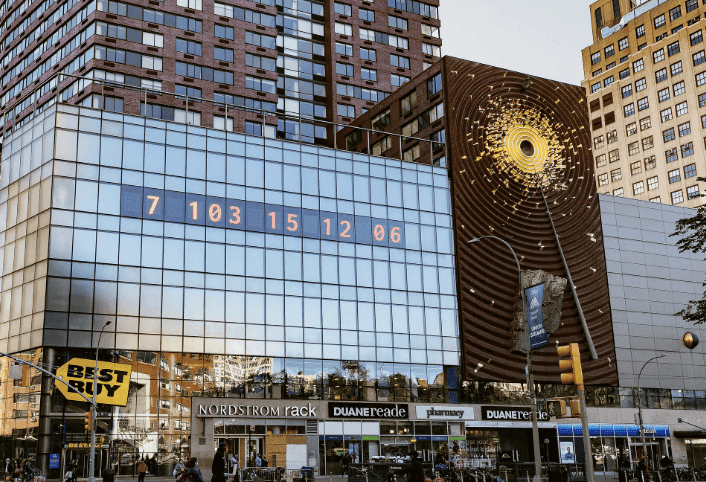
Strong trader consensus around a 90.5% implied probability of no change to the Climate Clock's July 22, 2029 deadline by year-end 2026 stems primarily from the clock's reliance on stable carbon budget estimates anchored to IPCC AR6 and Global Carbon Project data, combined with its infrequent revision cadence. Annual or quarterly updates adjust for recent emissions trends near 40–42 GtCO₂, but these rarely shift the deadline by more than 30 days without major new scientific inputs. No IPCC assessment or comprehensive budget recalculation is scheduled before late 2026, and current observational data show steady rather than abrupt emissions trajectories. A realistic challenge could arise from an unforeseen large-scale mitigation breakthrough or a peer-reviewed revision to remaining budgets that prompts an immediate model reset.
Eksperimental na AI-generated summary na nire-reference ang Polymarket data. Hindi ito trading advice at wala itong papel sa kung paano nire-resolve ang market na ito. · Na-updateWill the Climate Clock's 1.5°C deadline change by...?
Will the Climate Clock's 1.5°C deadline change by...?
$12,623 Vol.
$12,623 Vol.
$12,623 Vol.
$12,623 Vol.
A market resolves to “Yes” if, at any point on or before its listed date, 11:59 PM ET, the Climate Clock's published 1.5°C Deadline is more than 30 days earlier or more than 30 days later than July 22, 2029. Otherwise, that market resolves to “No”.
The Climate Clock's 1.5°C Deadline is published as a machine-readable timestamp in its public data feed at https://api.climateclock.world/v2/clock.json (the “timestamp” value of the carbon-deadline module), which is the same target the on-site countdown at https://climateclock.world displays. As of this market's creation, that Deadline is July 22, 2029 (timestamp 2029-07-22T16:00:00+00:00). The ordinary second-by-second ticking of the countdown toward the Deadline does not constitute a change; only a change to the published Deadline date itself qualifies.
Because a qualifying change is permanent once published, every market with a listed date on or after the change will resolve “Yes”, and markets whose listed date has already passed without a qualifying change will have resolved “No”. If the Climate Clock and its public data feed both become permanently unavailable before a qualifying change is published, all unresolved markets will resolve to “No”.
Binuksan ang Market: Aug 19, 2026, 6:40 PM ET
Resolution Source
https://climateclock.worldResolver
0x65070BE91...A market resolves to “Yes” if, at any point on or before its listed date, 11:59 PM ET, the Climate Clock's published 1.5°C Deadline is more than 30 days earlier or more than 30 days later than July 22, 2029. Otherwise, that market resolves to “No”.
The Climate Clock's 1.5°C Deadline is published as a machine-readable timestamp in its public data feed at https://api.climateclock.world/v2/clock.json (the “timestamp” value of the carbon-deadline module), which is the same target the on-site countdown at https://climateclock.world displays. As of this market's creation, that Deadline is July 22, 2029 (timestamp 2029-07-22T16:00:00+00:00). The ordinary second-by-second ticking of the countdown toward the Deadline does not constitute a change; only a change to the published Deadline date itself qualifies.
Because a qualifying change is permanent once published, every market with a listed date on or after the change will resolve “Yes”, and markets whose listed date has already passed without a qualifying change will have resolved “No”. If the Climate Clock and its public data feed both become permanently unavailable before a qualifying change is published, all unresolved markets will resolve to “No”.
Resolution Source
https://climateclock.worldResolver
0x65070BE91...Strong trader consensus around a 90.5% implied probability of no change to the Climate Clock's July 22, 2029 deadline by year-end 2026 stems primarily from the clock's reliance on stable carbon budget estimates anchored to IPCC AR6 and Global Carbon Project data, combined with its infrequent revision cadence. Annual or quarterly updates adjust for recent emissions trends near 40–42 GtCO₂, but these rarely shift the deadline by more than 30 days without major new scientific inputs. No IPCC assessment or comprehensive budget recalculation is scheduled before late 2026, and current observational data show steady rather than abrupt emissions trajectories. A realistic challenge could arise from an unforeseen large-scale mitigation breakthrough or a peer-reviewed revision to remaining budgets that prompts an immediate model reset.
Eksperimental na AI-generated summary na nire-reference ang Polymarket data. Hindi ito trading advice at wala itong papel sa kung paano nire-resolve ang market na ito. · Na-update

Mag-ingat sa mga external link.
Mag-ingat sa mga external link.
Mga Madalas na Tanong