

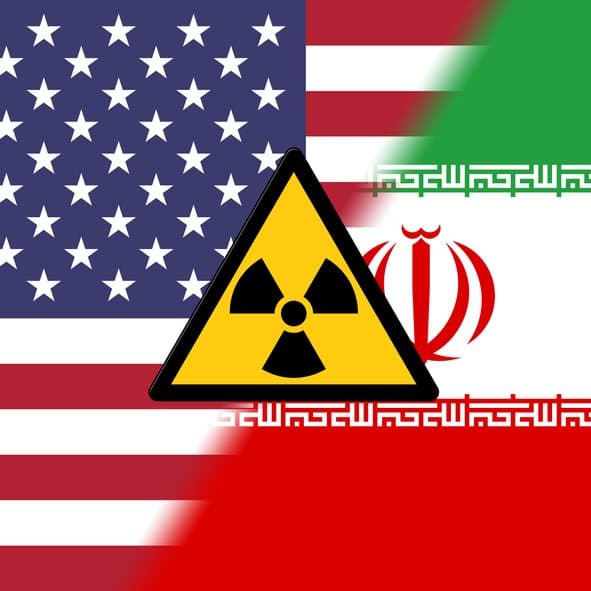
**Stalled diplomacy after the June 2026 interim memorandum unraveled explains the overwhelming trader consensus against any US-Iran peace talks before September 30.** The 60-day negotiation window tied to that accord passed without a broader agreement on nuclear issues, sanctions relief, Strait of Hormuz security, or Lebanon deconfliction, amid repeated violations, strikes, and mutual accusations. Recent early-September statements from Iranian President Masoud Pezeshkian expressing conditional readiness to revive the ceasefire have not produced scheduled follow-up sessions, while U.S. threats and regional frictions persist. Historical patterns of abrupt halts in these talks reinforce the low probabilities assigned to venues such as Switzerland, Qatar, or Oman. A sudden de-escalation or mediated breakthrough in the coming weeks remains the primary scenario that could still shift outcomes before the resolution date.
Eksperimental na AI-generated summary na nire-reference ang Polymarket data. Hindi ito trading advice at wala itong papel sa kung paano nire-resolve ang market na ito. · Na-updateWhere will the next next round of US-Iran peace talks be...?
Where will the next next round of US-Iran peace talks be...?
No Meeting by September 30 91.5%
Switzerland 3.4%
Pakistan 2.8%
Qatar 1.2%
$5,565,227 Vol.
$5,565,227 Vol.
No Meeting by September 30
92%
Switzerland
3%
Pakistan
3%
Qatar
1%
Oman
<1%
Turkey
<1%
Other
<1%
USA
<1%
Austria
<1%
UAE
<1%
Iraq
<1%
Other - Europe
<1%
Iran
<1%
Egypt
<1%
Italy
<1%
Kazakhstan
<1%
Saudi Arabia
<1%
Russia
<1%
Other - Middle East/North Africa
<1%
No Meeting by September 30 91.5%
Switzerland 3.4%
Pakistan 2.8%
Qatar 1.2%
$5,565,227 Vol.
$5,565,227 Vol.
No Meeting by September 30
92%
Switzerland
3%
Pakistan
3%
Qatar
1%
Oman
<1%
Turkey
<1%
Other
<1%
USA
<1%
Austria
<1%
UAE
<1%
Iraq
<1%
Other - Europe
<1%
Iran
<1%
Egypt
<1%
Italy
<1%
Kazakhstan
<1%
Saudi Arabia
<1%
Russia
<1%
Other - Middle East/North Africa
<1%
This market will resolve according to the country in which the next formal senior-level round of peace talks between representatives of the United States and Iran begins by September 30, 2026, 11:59 PM ET.
A qualifying round must be a deliberate in-person diplomatic meeting or negotiating round concerning US-Iran relations, involving senior representatives of both the United States and Iran who are acting in an official capacity and are authorized to conduct or materially direct diplomacy on behalf of their governments.
Indirect in-person diplomacy through designated mediators, facilitators, or interlocutors will qualify, provided senior representatives of both the United States and Iran are participating in the same formal diplomatic process with the knowledge and authorization of their respective governments. The representatives need not be in the same room at the same time.
Follow-on technical talks from the June 22 Switzerland round will not qualify by themselves. Technical, staff-level, working-group, implementation, monitoring, preparatory, or deconfliction meetings will not qualify unless they occur as part of a new formally convened senior-level U.S.-Iran peace-talks round.
Brief greetings, chance encounters, photo opportunities, ceremonial appearances, or talks not deliberately aimed at diplomacy or negotiation will not count.
The meeting must be in-person (including indirect in-person meetings) and must be publicly acknowledged by either government or reported by a consensus of credible media. Remote meetings, phone calls, or other meetings where the relevant parties are not present will not count.
If a qualifying round occurs in more than one country, resolution will be based on the country where the first qualifying senior-level diplomatic session begins.
If the next qualifying round begins in any country in the Middle East or North Africa other than the listed options, this market will resolve to “Other - Middle East/North Africa.”
If the next qualifying round begins in any country in Europe other than the listed options, this market will resolve to “Other - Europe.”
For purposes of this market, countries’ regions will be determined based on the U.S. State Department’s regional classifications in the “Countries and Areas List” (https://www.state.gov/countries-and-areas-list). Any country classified as part of “Europe and Eurasia” will be considered to be in Europe. Any country classified as part of “Near East (Middle East and North Africa)” will be considered to be in the Middle East/North Africa.
If the next qualifying round begins in any unlisted country that is not classified in either specified region, this market will resolve to “Other.”
If no qualifying round begins by September 30, 2026, 11:59 PM ET, this market will resolve to “No Meeting by September 30.”
The resolution sources for this market will be official information from the governments of the United States and Iran, and a consensus of credible reporting.
Binuksan ang Market: Jun 22, 2026, 10:47 PM ET
Resolver
0x69c47De9D...This market will resolve according to the country in which the next formal senior-level round of peace talks between representatives of the United States and Iran begins by September 30, 2026, 11:59 PM ET.
A qualifying round must be a deliberate in-person diplomatic meeting or negotiating round concerning US-Iran relations, involving senior representatives of both the United States and Iran who are acting in an official capacity and are authorized to conduct or materially direct diplomacy on behalf of their governments.
Indirect in-person diplomacy through designated mediators, facilitators, or interlocutors will qualify, provided senior representatives of both the United States and Iran are participating in the same formal diplomatic process with the knowledge and authorization of their respective governments. The representatives need not be in the same room at the same time.
Follow-on technical talks from the June 22 Switzerland round will not qualify by themselves. Technical, staff-level, working-group, implementation, monitoring, preparatory, or deconfliction meetings will not qualify unless they occur as part of a new formally convened senior-level U.S.-Iran peace-talks round.
Brief greetings, chance encounters, photo opportunities, ceremonial appearances, or talks not deliberately aimed at diplomacy or negotiation will not count.
The meeting must be in-person (including indirect in-person meetings) and must be publicly acknowledged by either government or reported by a consensus of credible media. Remote meetings, phone calls, or other meetings where the relevant parties are not present will not count.
If a qualifying round occurs in more than one country, resolution will be based on the country where the first qualifying senior-level diplomatic session begins.
If the next qualifying round begins in any country in the Middle East or North Africa other than the listed options, this market will resolve to “Other - Middle East/North Africa.”
If the next qualifying round begins in any country in Europe other than the listed options, this market will resolve to “Other - Europe.”
For purposes of this market, countries’ regions will be determined based on the U.S. State Department’s regional classifications in the “Countries and Areas List” (https://www.state.gov/countries-and-areas-list). Any country classified as part of “Europe and Eurasia” will be considered to be in Europe. Any country classified as part of “Near East (Middle East and North Africa)” will be considered to be in the Middle East/North Africa.
If the next qualifying round begins in any unlisted country that is not classified in either specified region, this market will resolve to “Other.”
If no qualifying round begins by September 30, 2026, 11:59 PM ET, this market will resolve to “No Meeting by September 30.”
The resolution sources for this market will be official information from the governments of the United States and Iran, and a consensus of credible reporting.
Resolver
0x69c47De9D...**Stalled diplomacy after the June 2026 interim memorandum unraveled explains the overwhelming trader consensus against any US-Iran peace talks before September 30.** The 60-day negotiation window tied to that accord passed without a broader agreement on nuclear issues, sanctions relief, Strait of Hormuz security, or Lebanon deconfliction, amid repeated violations, strikes, and mutual accusations. Recent early-September statements from Iranian President Masoud Pezeshkian expressing conditional readiness to revive the ceasefire have not produced scheduled follow-up sessions, while U.S. threats and regional frictions persist. Historical patterns of abrupt halts in these talks reinforce the low probabilities assigned to venues such as Switzerland, Qatar, or Oman. A sudden de-escalation or mediated breakthrough in the coming weeks remains the primary scenario that could still shift outcomes before the resolution date.
Eksperimental na AI-generated summary na nire-reference ang Polymarket data. Hindi ito trading advice at wala itong papel sa kung paano nire-resolve ang market na ito. · Na-update
Mag-ingat sa mga external link.
Mag-ingat sa mga external link.
Mga Madalas na Tanong